






















Oral Mucosal Cannabinoid Delivery: A Formulation Roadmap for Bypassing First-Pass Metabolism

By Dr. Benjamin Caplan, MD | Board-Certified Family Physician, CMO at CED Clinic | Evidence Watch
Want to apply this research to your care?
CED Clinic translates emerging research into individualized clinical care. Dr. Caplan has treated 30,000+ patients.
Book a consultation →When CBD or THC is swallowed, only about 6 to 19 percent of the active compound reaches the bloodstream. A new review explores how dissolving cannabinoid formulations under the tongue or against the cheek could dramatically improve absorption, cataloging emerging technologies from 3D-printed films to terpene-based permeation enhancers, while noting that clinical proof for any single approach remains limited.
Oral Mucosal Cannabinoid Delivery: A Formulation Roadmap for Bypassing First-Pass Metabolism
A 2026 narrative review published in AAPS PharmSciTech maps the landscape of buccal and sublingual dosage form technologies for CBD and THC, highlighting persistent bioavailability challenges, the pharmacokinetic rationale for avoiding first-pass hepatic metabolism, and the emerging formulation solutions that may reshape how cannabinoid medicines are designed and delivered to patients.
#72
Strong Clinical Relevance
Directly addresses a core challenge in cannabinoid therapeutics: the poor and unpredictable bioavailability that complicates dosing, onset, and clinical outcomes for patients using oral cannabinoid products.
Drug Delivery
Sublingual & Buccal Formulations
Pharmaceutical Technology
CBD & THC Pharmacokinetics
The single greatest obstacle to predictable cannabinoid dosing is bioavailability. When a patient swallows a CBD capsule, as little as 6 percent of the active compound may reach systemic circulation, creating enormous variability in clinical response and undermining the dose-response relationships clinicians need to titrate effectively. Meanwhile, inhaled delivery achieves more reliable absorption but carries respiratory concerns that make it unsuitable for many patient populations. Understanding the formulation technologies that could bridge this gap is essential for any clinician advising patients on cannabinoid products, and for any researcher designing the next generation of cannabinoid medicines.
Cannabinoids are highly lipophilic molecules with poor aqueous solubility, making them notoriously difficult to deliver through the gastrointestinal tract. When swallowed, CBD and THC are subject to extensive first-pass hepatic metabolism that reduces absolute bioavailability to roughly 6 to 19 percent for CBD and 6 to 10 percent for THC, compared to approximately 31 percent when inhaled. The first-pass conversion of THC to 11-hydroxy-THC is clinically significant because this metabolite is reported to be up to four times more psychoactive than the parent compound, adding a safety dimension to the bioavailability problem. The oral mucosa, particularly the sublingual and buccal regions, offers an alternative absorption surface that drains directly into the systemic venous circulation, theoretically bypassing the liver altogether.
This 2026 review from Auckland University of Technology catalogs the formulation strategies being developed to exploit transmucosal cannabinoid absorption, including fast-dissolving films, mucoadhesive matrices, in situ gels, and particulate systems. It distinguishes between buccal delivery, which favors sustained-release mucoadhesive designs due to the thicker, less permeable buccal epithelium, and sublingual delivery, which is better suited to fast-dissolving formats that capitalize on the thinner, more vascular sublingual mucosa. The review also highlights how the commercially available oromucosal product Sativex largely fails to achieve its intended transmucosal absorption because most of the sprayed dose is swallowed. The authors note that technologies such as hot melt extrusion, 3D printing, terpene-based permeation enhancers, and cyclodextrin inclusion complexes show promise but lack robust comparative clinical evidence. As a narrative review without a systematic search methodology, its literature coverage cannot be confirmed as comprehensive.
This review does something genuinely useful: it explains, in one place, why so many patients report wildly different experiences from the same edible or capsule, and why the oral mucosa represents a pharmacologically rational alternative. The distinction between buccal and sublingual anatomy is surprisingly underappreciated, even among prescribers, and the paper makes a compelling case that these two sites demand fundamentally different formulation designs. Where the review falls short is in the distance between formulation science and the bedside. The technologies described are elegant on paper, but we do not yet have the head-to-head clinical data to tell a patient that one delivery system consistently outperforms another.
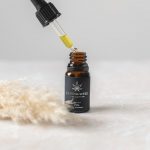
In practice, I counsel patients to use sublingual tinctures held under the tongue for at least 60 to 90 seconds before swallowing, understanding that even this approach results in a mix of transmucosal and gastrointestinal absorption. I pay close attention to onset timing and patient-reported variability as indirect markers of whether meaningful transmucosal absorption is occurring. For patients who need predictable pharmacokinetics, I remain honest that we are still waiting for the formulation science described in this review to translate into commercially available, clinically validated products.
For clinicians prescribing or advising on cannabinoid products, this review underscores a critical gap between the pharmacokinetic rationale for transmucosal delivery and the current state of available formulations. The documented shortcomings of Sativex, where the bulk of the dose is swallowed rather than absorbed through the mucosa, should temper assumptions about any existing oromucosal product. The review positions us early in a formulation development arc: the science is conceptually mature, but the clinical validation stage has barely begun. This is important context when evaluating marketing claims from manufacturers of sublingual or buccal cannabinoid products.
The pharmacological detail around 11-hydroxy-THC production during first-pass metabolism deser