



























Table of Contents
- Concentrate Cannabis Sugar Recipe
- Why Concentrate Cannabis Sugar Works So Well
- What Is Concentrate Cannabis Sugar?
- Ingredients & Equipment
- Functional Perks Of Concentrate Cannabis Sugar
- How To Make Concentrate Cannabis Sugar
- Concentrate Cannabis Sugar Dosing Guide
- Creative Ways To Use Concentrate Cannabis Sugar
- How To Make It Gently Altering Or CBD-Focused
- Flavor & Pairing Suggestions
- Storage Tips & Shelf Life
- Common Concentrate Cannabis Sugar Mistakes
- Cannabis & Culinary Culture
- Frequently Asked Questions
Concentrate Cannabis Sugar Recipe
A precise infused sugar method using cannabis concentrate for cleaner flavor, flexible edible dosing, and lower-effort homemade preparation.
Concentrate cannabis sugar is granulated sugar infused with dissolved cannabis concentrate, usually through a small amount of food-grade alcohol before evaporation. It is often easier to calculate than flower-based sugar because the total THC content may be more clearly labeled.
New to infused sugar? Start with the Cannabis Sugar Dosing Guide before preparing high-potency batches.
Curious about the clinical evidence behind this?
Dr. Caplan can help you understand the therapeutic potential — and the right dosing approach — behind cannabis-infused preparations.
Book a consultation →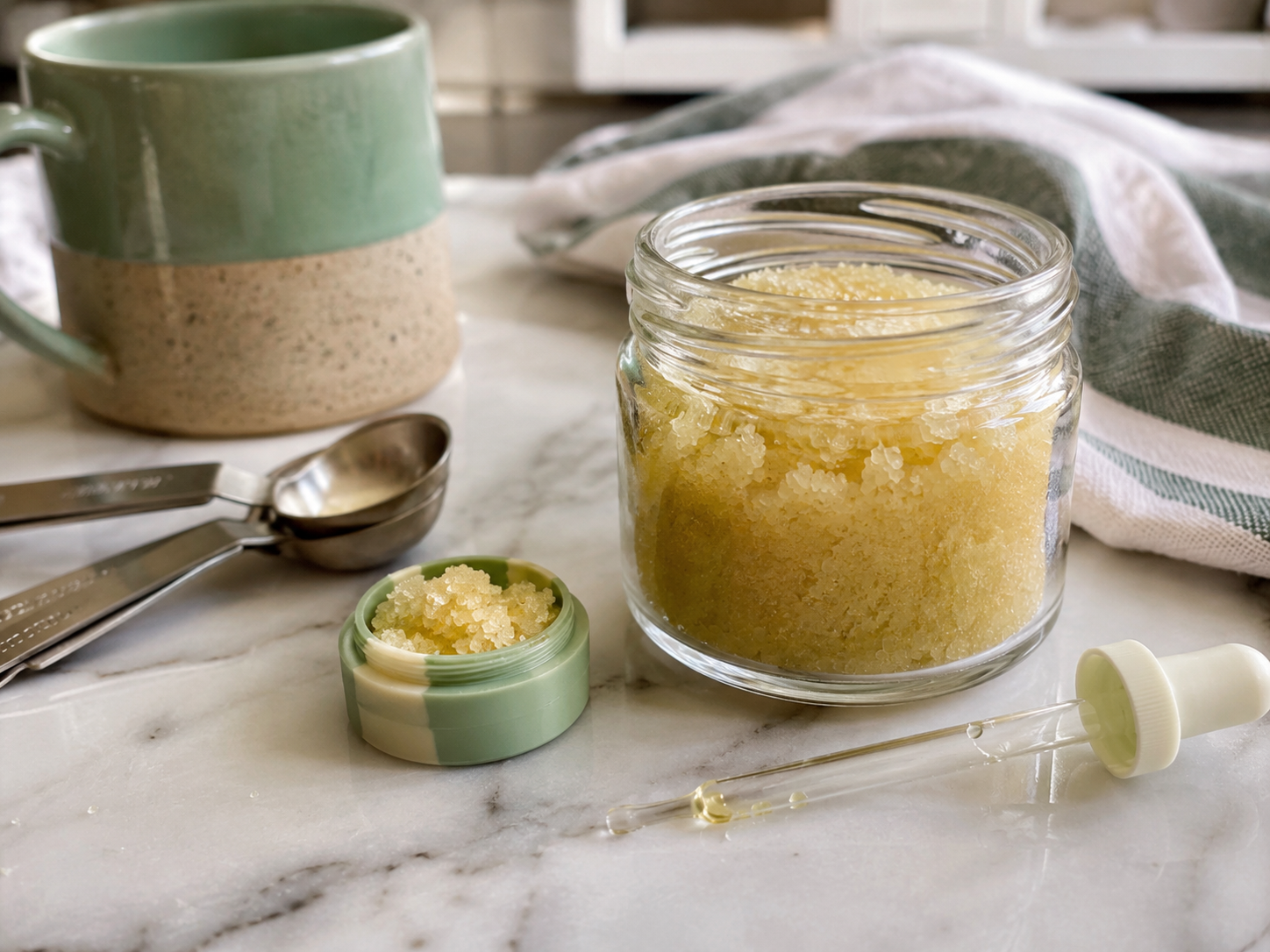
Why Concentrate Cannabis Sugar Works So Well
Concentrate cannabis sugar is one of the most practical ways to make a sweet, shelf-stable infused ingredient with a cleaner flavor profile than many flower-based recipes.
Because concentrates are highly potent and often labeled with total cannabinoid content, they can make dosing math more straightforward. That does not make the final batch perfect or lab-verified, but it can make the starting estimate much easier to understand.
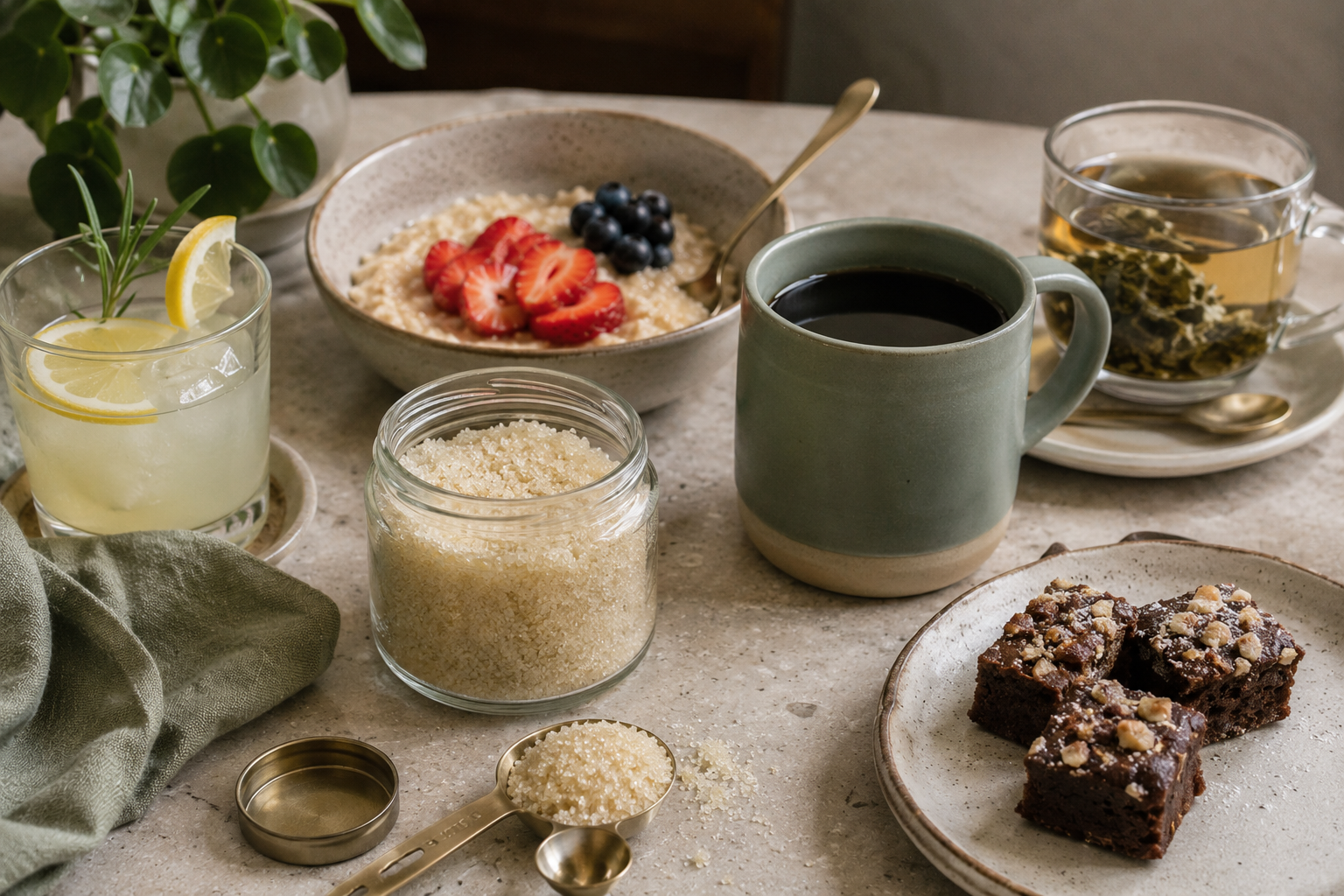
This method is especially useful for readers who want an infused sweetener that can dissolve into coffee, tea, lemonade, oatmeal, mocktails, desserts, and controlled microdose routines.
TL;DR
✅ Cleaner flavor than many flower infusions
✅ Easier potency math when concentrate strength is known
✅ Works well in coffee, tea, oatmeal, mocktails, and desserts
✅ Can be made strong, mild, or microdose-friendly
What Is Concentrate Cannabis Sugar?
Concentrate cannabis sugar is granulated sugar infused with cannabis concentrate, such as distillate, rosin, resin, wax, shatter, or a concentrate-based tincture.
The concentrate is first dissolved or diluted into a small volume of food-grade alcohol. That liquid is mixed thoroughly through sugar, then allowed to evaporate until the sugar becomes dry, granular, and ready to store.
It depends on how much concentrate is added and how many cups of sugar are used. A 400 mg THC concentrate mixed into 2 cups of sugar makes about 12.5 mg THC per tablespoon.
| Concentrate Source | Estimated THC | 2 Cups Sugar | Approx. THC Per Tablespoon |
|---|---|---|---|
| 0.5 g concentrate at 80% THC | 400 mg THC | 32 tablespoons | 12.5 mg |
| 1 g concentrate at 80% THC | 800 mg THC | 32 tablespoons | 25 mg |
| 0.25 g concentrate at 80% THC | 200 mg THC | 32 tablespoons | 6.25 mg |
| 100 mg THC tincture | 100 mg THC | 32 tablespoons | 3.1 mg |
Ingredients & Equipment
✅ 2 cups granulated sugar
✅ Cannabis concentrate with known potency
✅ Small amount of high-proof food-grade alcohol
✅ Optional vanilla bean, citrus zest, cinnamon, or ginger
✅ Optional CBD concentrate or tincture for a gentler ratio
✅ Glass mixing bowl
✅ Silicone spatula
✅ Parchment paper
✅ Glass baking dish
✅ Airtight glass storage jars
✅ Measuring spoons or digital scale

Slow mixing helps distribute concentrate more evenly through the sugar.
Functional Perks Of Concentrate Cannabis Sugar
✨ Easier dosing math when total THC is known
✨ Cleaner taste than many flower-based infusions
✨ Dissolves well into drinks and soft foods
✨ Can be made strong or diluted for microdose use
✨ Useful for readers who prefer smoke-free cannabis options
✨ Works as a flexible base ingredient rather than a finished edible
Pro Tip: Concentrate sugar is easiest to personalize when you design the batch around a practical serving size. A sugar that measures clearly by teaspoon or tablespoon is usually more useful than one that requires tiny fractions.
How To Make Concentrate Cannabis Sugar
Pro Tip: Even distribution matters more than speed. Slow mixing and full evaporation are the two easiest ways to improve texture and dosing consistency.
Concentrate Cannabis Sugar Dosing Guide
Concentrates can make strong infused sugar very quickly. The benefit is clearer math. The risk is that small measurement errors can create a batch that is much stronger than intended.
Example Concentrate Potency Calculation
1 gram concentrate at 80% THC contains approximately 800 mg THC before preparation losses.
800 mg THC mixed into 2 cups sugar equals 32 tablespoons.
800 mg THC ÷ 32 tablespoons = about 25 mg THC per tablespoon, which is strong for many readers.
| Total THC | Cups Sugar | Approx. THC Per Tablespoon | Approx. THC Per Teaspoon |
|---|---|---|---|
| 200 mg | 2 cups | 6.25 mg | 2.08 mg |
| 400 mg | 2 cups | 12.5 mg | 4.17 mg |
| 800 mg | 4 cups | 12.5 mg | 4.17 mg |
| 800 mg | 8 cups | 6.25 mg | 2.08 mg |
Concentrate Cannabis Sugar Calculator
Potency calculations are estimates only and may vary depending on concentrate testing accuracy, mixing technique, evaporation consistency, storage conditions, and individual metabolism.
Concentrate cannabis sugar estimates can vary because of THC percentage inaccuracies, decarboxylation status, concentrate labeling, dilution technique, mixing consistency, evaporation time, storage conditions, individual metabolism, gut health, tolerance, and sensitivity to THC.
If you are newer to edibles or sensitive to THC, start with the smallest measurable serving, wait at least 90 minutes before increasing, and adjust gradually across different days rather than during one session.
Creative Ways To Use Concentrate Cannabis Sugar
☕ Stir into coffee, espresso drinks, or cold brew
🍵 Add to herbal tea, chai, or matcha
🥣 Sprinkle onto oatmeal, yogurt, granola, or chia pudding
🍋 Dissolve into lemonade, citrus mocktails, or sparkling water
🍫 Use carefully in chocolate desserts, brownies, or dessert toppings
🍓 Add a measured amount to fruit bowls or berry compotes
🥛 Stir into warm milk-style drinks when the dose is modest
🥡 Use a small amount in sweet-savory glazes when the final portioning is clear
Pro Tip: When adding infused sugar to a full recipe, calculate the whole batch first, then divide by the number of servings. A spoonful in coffee is easier to understand than a large dessert tray unless the tray is portioned carefully.
Concentrate cannabis sugar works best when each serving is measured clearly.
How To Make It Gently Altering Or CBD-Focused
Concentrate cannabis sugar can be made with THC concentrate, CBD concentrate, or a blend of both. If the goal is a gentler experience, use less THC, more sugar, or a CBD-dominant ratio.
Some readers prefer ratios such as 5:1 or 10:1 CBD to THC. These ratios may feel less intoxicating for many people, but the final experience depends on dose, product chemistry, metabolism, and individual sensitivity.
A non-euphoric version is usually made with CBD-dominant concentrate containing little or no THC. Check the product label carefully, because even small amounts of THC can matter for sensitive readers.
Flavor & Pairing Suggestions
Concentrates often have less plant flavor than flower infusions, but they are not flavorless. Rosin and resin can carry more terpene character, while distillate usually tastes cleaner and more neutral.
Citrus-forward profiles can pair well with tea, lemonade, fruit bowls, and lighter desserts. Earthier profiles often fit better with coffee, cacao, oatmeal, cinnamon, and maple flavors.
Strain names are not reliable dosing tools. Pay more attention to total cannabinoid content, terpene profile, serving size, and how you personally respond.
For calm evenings, many readers prefer lower THC and more CBD. For social or creative use, smaller THC servings are often easier to interpret than a strong edible dose.
Storage Tips & Shelf Life
Store concentrate cannabis sugar in airtight glass jars away from heat, sunlight, humidity, and repeated kitchen steam exposure.
Many properly dried batches remain usable for several months, although flavor and cannabinoid intensity may gradually change over time.
Use clean, dry measuring spoons every time. Moisture can create clumping, and clumping makes accurate serving sizes harder to repeat.
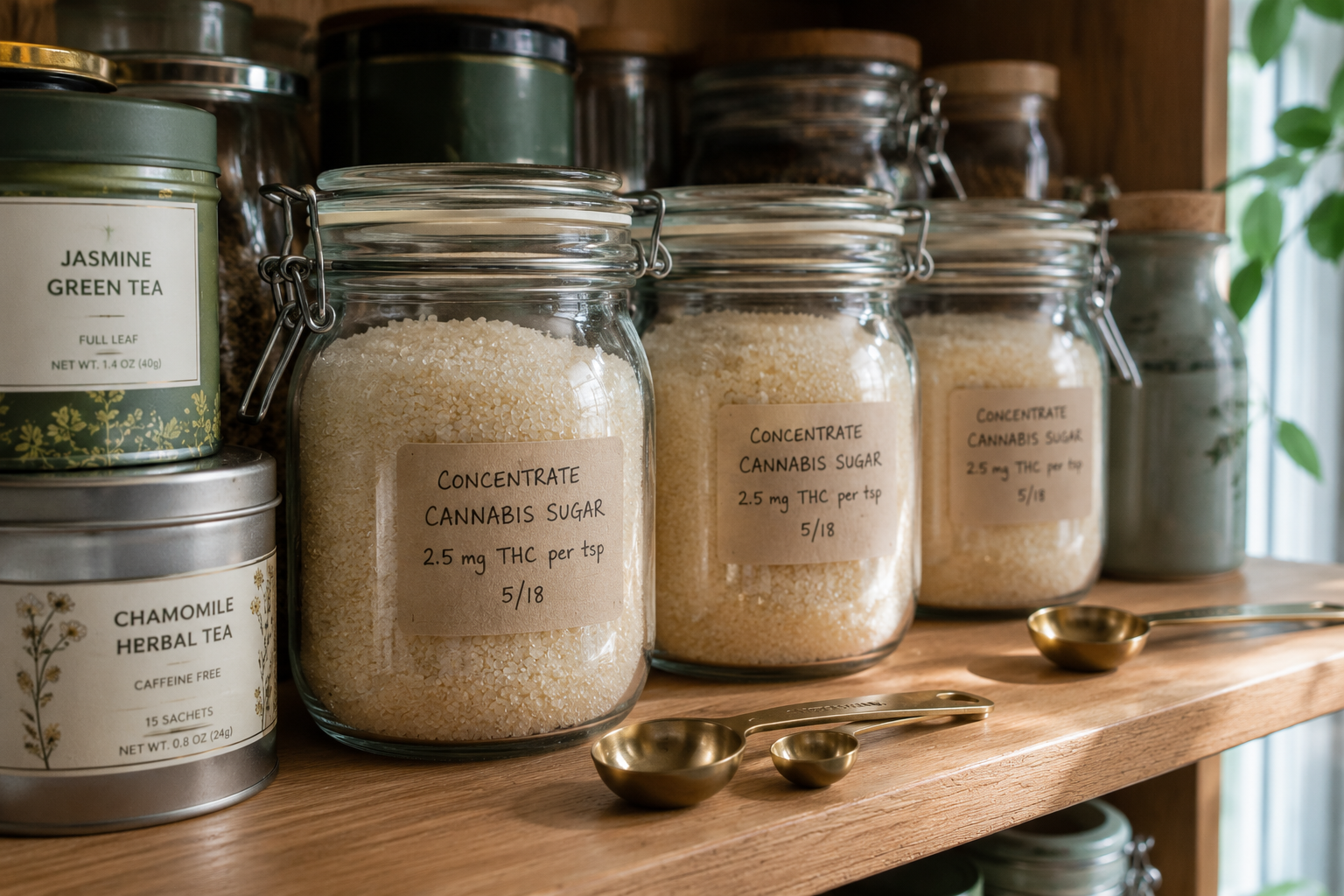
Clear labels help protect dosing consistency and reduce accidental overuse.
Common Concentrate Cannabis Sugar Mistakes
Cannabis & Culinary Culture
Infused recipes are becoming more precise, more practical, and more food-centered. That shift matters because homemade cannabis does not have to mean mystery potency or overwhelming edible experiences.
Concentrate cannabis sugar fits that newer kitchen mindset. It treats cannabis as an ingredient that should be measured, labeled, stored carefully, and adjusted to the individual.
When dosing is clear, food can become a more humane form of care. A measured spoonful can feel simple, ordinary, and personal.
Have thoughts on this? Share it:
Explore the full CED Clinic cannabis recipe collection for infused oils, butters, beverages, desserts, and physician-guided edible preparation strategies.
Frequently Asked Questions
These are the questions readers ask most often about concentrate cannabis sugar, including potency calculations, concentrate types, storage practices, dosing estimates, and beginner-friendly serving strategies.
What is concentrate cannabis sugar?
Concentrate cannabis sugar is granulated sugar infused with dissolved cannabis concentrate. The concentrate is typically mixed into a small amount of food-grade alcohol, stirred through sugar, and dried until the alcohol evaporates. The finished sugar can be measured into drinks, foods, and dessert recipes.
How do I make cannabis sugar with concentrate?
Dissolve a known amount of cannabis concentrate into a small amount of food-grade alcohol, then stir that liquid thoroughly into sugar. Spread the sugar thinly and allow it to dry fully. Label the finished jar with estimated THC per tablespoon and teaspoon.
Do I need to decarb concentrate first?
It depends on the concentrate. Distillate is usually already activated, while some rosin, resin, wax, or shatter may require decarboxylation for stronger edible effects. Check the product type and label before assuming it is ready for oral use.
How strong is concentrate cannabis sugar?
Strength depends on total THC and total sugar volume. For example, 400 mg THC mixed into 2 cups of sugar makes about 12.5 mg THC per tablespoon. More sugar creates a milder batch, while less sugar creates a stronger one.
What is a good beginner dose?
Many beginners prefer 2.5 to 5 mg THC or less when testing a new edible. Some sensitive readers may feel even smaller amounts. Start with a small serving, wait at least 90 minutes, and avoid increasing during the same session.
Can I make this with CBD concentrate instead of THC?
Yes. CBD concentrate or CBD tincture can be used to make a less intoxicating infused sugar. If the product contains THC, even small amounts may matter for sensitive readers, so check the label carefully.
Why is my concentrate cannabis sugar clumping?
Clumping usually happens when moisture or alcohol remains in the sugar. Spread the sugar thinly, dry it longer, and stir occasionally during evaporation. Store it only after it feels dry and granular.
Can I use concentrate cannabis sugar in coffee?
Yes. Coffee is one of the easiest uses because the sugar dissolves well and can be measured by teaspoon or tablespoon. Be mindful that caffeine and THC can feel different together than either one alone.
How long does concentrate cannabis sugar last?
When dried fully and stored in airtight glass jars away from moisture, heat, and sunlight, many batches remain usable for several months. Texture and cannabinoid intensity may gradually change over time. Discard any batch with mold, unusual odor, or visible moisture buildup.
Is concentrate cannabis sugar stronger than flower cannabis sugar?
It can be, but it depends on the recipe. Concentrates are much more potent by weight than flower, so they can make stronger sugar with less material. The final strength depends on total THC and how much sugar you use.