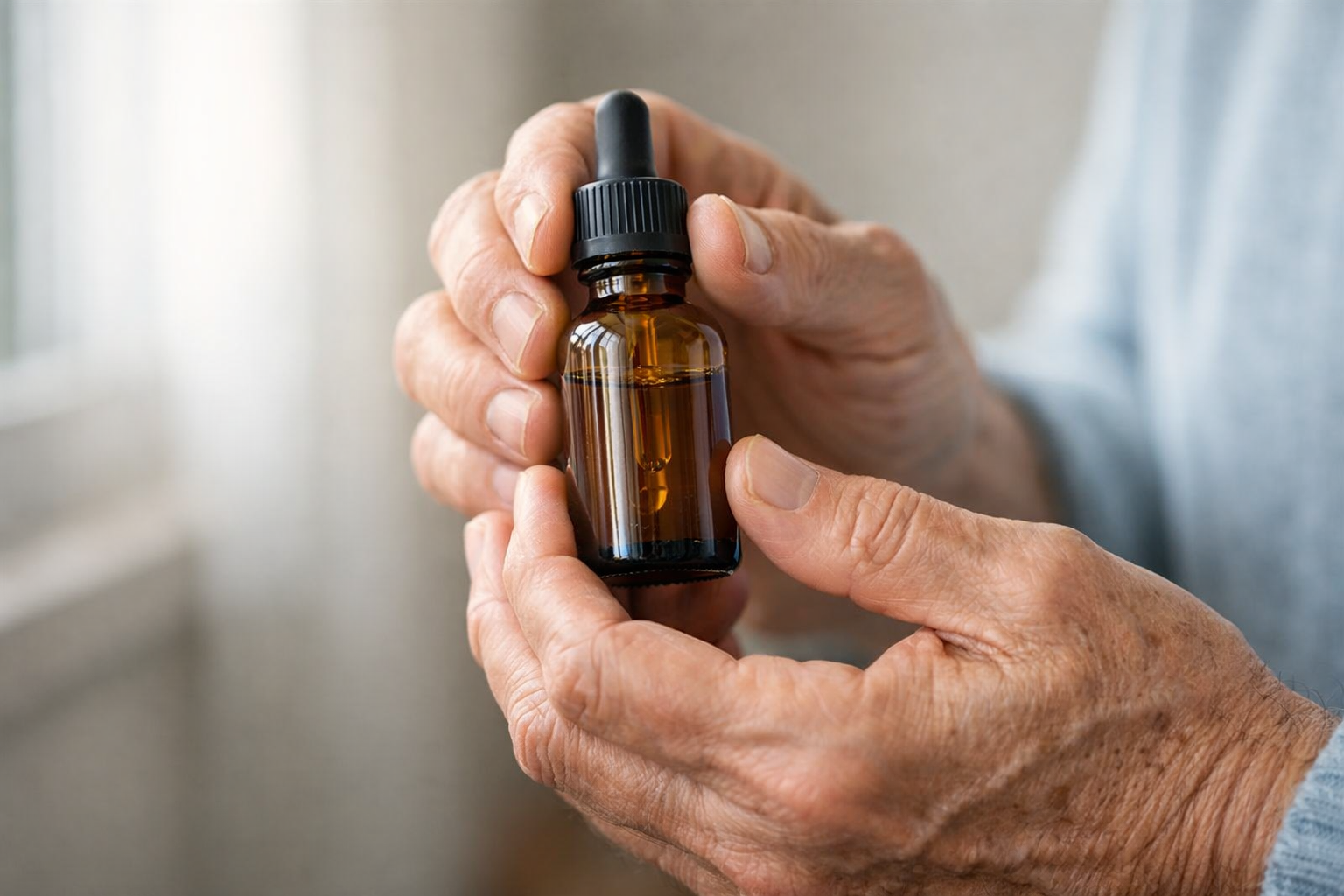
Cannabis Dosing for Seniors: 70+
Predictability over potency. A fall-aware, medication-aware framework for starting cannabis after 70 without turning a therapeutic plan into a surprise.
Educational content only. Decisions should be personalized with your clinician, especially when fall risk, frailty, or complex medications are involved.

What You Will Learn
Most dosing advice online is written for healthy adults with simple medication lists. That is not who most 70-plus patients are.
This is a clinician-style dosing blueprint for older adults that prioritizes steadiness and function. In this effort to share cannabis dosing for seniors, you will learn how aging physiology shifts dose response, how route and timing change safety risk, how to titrate without stacking doses, and how to think about cannabis in the context of polypharmacy. This is not about chasing a sensation. It is about building a repeatable plan that protects balance, cognition, and autonomy.
Evidence vs Clinical Framework, What Is Known and What Is Practical
Here is the honest truth about geriatric cannabis dosing.
We have good human evidence that cannabinoids can increase side effects that matter disproportionately in older adults, including dizziness and sedation. We also have evidence suggesting that higher THC exposure increases the odds of certain neuropsychiatric adverse effects in older age groups. What we do not have is one universally accepted dosing protocol validated by large randomized trials focused solely on adults over 70 across common indications.
So the framework below is intentionally conservative. It is a safety-first approach designed to reduce surprise and protect steadiness. It is clinical reasoning anchored to the evidence we do have about common adverse events, translated into a plan that prioritizes predictability.
Why this conservative approach is evidence-aligned
-
🧍
Dizziness is a common adverse effect in controlled evidence
A large systematic review and meta-analysis of cannabinoids for medical use found non-serious adverse events were more common with cannabinoids than controls, and dizziness was commonly reported.
Whiting et al. 2015 (JAMA), PMID 26103030 -
🧠
In adults 50+, THC dose relates to certain adverse effects
A systematic review and metaregression in adults aged 50+ found THC dose moderated incident rate ratios for outcomes such as dizziness or lightheadedness and thinking or perception disorders.
Velayudhan et al. 2021 (JAMA Network Open), doi:10.1001/jamanetworkopen.2020.35913 -
👵
Older-adult cohorts commonly report dizziness and sleepiness
Prospective observational data in adults 65+ describe adverse effects such as dizziness and sleepiness or fatigue, alongside the need for careful monitoring in real-world older populations.
Abuhasira et al. 2019, PMID 31683817
These citations support the safety rationale. They do not replace personalized clinical guidance.

Why “Start Low and Go Slow” Is Not Enough After 70
“Start low and go slow” is kind advice, and it is incomplete advice.
After 70, the biggest risk is not that cannabis will fail to help. The biggest risk is that cannabis will create a surprise at the wrong time: dizziness when someone stands up, sedation layered onto other sedating medications, or impaired steadiness during a nighttime bathroom trip.
After 70, the goal is not intensity. The goal is predictability.
Predictability is what makes a trial safe enough to learn from.
Why Aging Changes Cannabis Response
Older adults are physiologically distinct. Several shifts matter clinically:
- 🧬Metabolism and clearance can change
Effects can last longer, and a dose that felt mild years ago can feel stronger now. - 🧠Cognitive sensitivity can rise
Small psychoactive effects can feel disruptive when pain, sleep loss, and medication layering are already in play. - 🧍Balance becomes a higher-stakes variable
Orthostatic shifts, sedation, and slowed reaction time matter more when falls carry higher consequences. - 💊Polypharmacy becomes the default
A “low dose” can become “too much” once it interacts with other sedating or blood pressure active medications.
This is why cannabis dosing over 70 should look more like careful pharmacology and less like casual experimentation.
Step 1: Define One Target, Not Ten
Pick one symptom target you can measure. Not a mood. Not a vibe. Something you can track.
Good targets
- 🌙Minutes to fall asleep
- 🛏️Number of nighttime awakenings
- 🔥Pain level at bedtime
- 🦴Morning stiffness duration
- 🚶Walking distance before discomfort
If you cannot measure it, you cannot titrate it safely.
Step 2: Choose Route Based on Timing Risk
Inhalation
Fast onset. Shorter duration. Easier to stop quickly if it feels like too much. Overshoot can happen quickly if someone takes repeated inhalations trying to “get it to work.”
Edibles
Delayed onset. Longer duration. Dose stacking is common when someone takes a second dose before the first has fully shown its effect. In older adults, stacking is one of the simplest ways to create prolonged dizziness, confusion, or sedation.
Sublingual tinctures
Often a middle path. More controllable increments for many patients, and commonly easier to make small, repeatable adjustments.
Route does not eliminate fall risk. It shifts when fall risk appears.
Early trials should happen when mobility demands are low. If nighttime bathroom trips are part of the routine, avoid making bedtime your first experiment window.
Step 3: A Conservative THC Starting Framework Over 70
This is a cautious clinical framework designed to reduce surprise. It is not one-size-fits-all, and it is not a promise of benefit.
Category A: Lower fall risk, no major frailty, stable medications
- 1️⃣First trial: 0.5 mg to 1 mg THC equivalent
- ⏳Wait: full onset window before considering any adjustment
- 🚫Avoid: alcohol during early trials, and avoid starting on the same day as any new sedating medication change
Category B: Moderate fall risk, cognitive vulnerability, or sedation layering
- 1️⃣First trial: 0.25 mg to 0.5 mg THC equivalent, or CBD-forward start
- 🗓️Titrate: no faster than every 48 to 72 hours, and only if there is measurable benefit without new instability
Category C: High fall risk, prior syncope, significant frailty, or multiple sedating medications
- 🧩Default start: CBD-forward approach
- 🧪If THC is used: sub-0.5 mg trial, supervised when feasible
- 🛑Non-negotiable: monitor steadiness, sedation, and confusion for a week before any escalation
Why so cautious?
Dizziness and sedation are among the most commonly reported adverse effects with cannabinoids in controlled evidence and older adult cohorts. THC dose appears to influence some adverse event rates. That matters more after 70 because it maps directly onto fall risk.
Evidence anchors: Whiting et al. 2015 (JAMA), Velayudhan et al. 2021, Abuhasira et al. 2019
The 7-Day Monitoring Protocol
If you introduce THC after 70, monitor deliberately for one week. This is how you protect the trial from turning into a story.
- 🧍Standing dizziness: especially within the first 2 hours after dosing
- 🚽Nighttime steadiness: bathroom trips are where risk shows up
- 😴Daytime sedation: unplanned naps and grogginess count
- 🧭Near-falls: catch-yourself moments are data
- 🧠New confusion: especially in conversations and task switching
Safety is not a disclaimer. It is a dosing strategy.

Polypharmacy: The Part That Turns “Low Dose” Into “Too Much”
In older adults, interaction risk is often less about rare chemistry and more about common layering.
Pharmacodynamic layering
These combinations can magnify sedation, slowed reaction time, and orthostatic effects:
- 💤Sleep medications
- 🧠Benzodiazepines and other anxiolytics
- 🩹Opioids and other pain medications that sedate
- 💊Gabapentinoids and similar neurologic agents
- 🫀Blood pressure medications that increase orthostatic vulnerability
Pharmacokinetic considerations
Cannabinoids can influence CYP450 enzymes and therefore can alter levels of some medications in some individuals. One high-stakes example is warfarin, where published case reports show INR elevation after CBD exposure, and a systematic review summarizes anticoagulant interaction evidence.
Evidence anchors
- 🧪CBD and warfarin interaction case report
Grayson et al. 2017, PMID 29387536 - 📈Systematic review of anticoagulant interactions with cannabinoids
Smythe et al. 2023, PMID 37740600 - 🧬CBD and THC effects on CYP450 enzymes
Drug Metabolism Reviews 2024 systematic review, PMID 38655747
Practical rule
Do not introduce cannabis at the same time as you adjust other sedating medications. Make one change at a time so you can interpret the result.
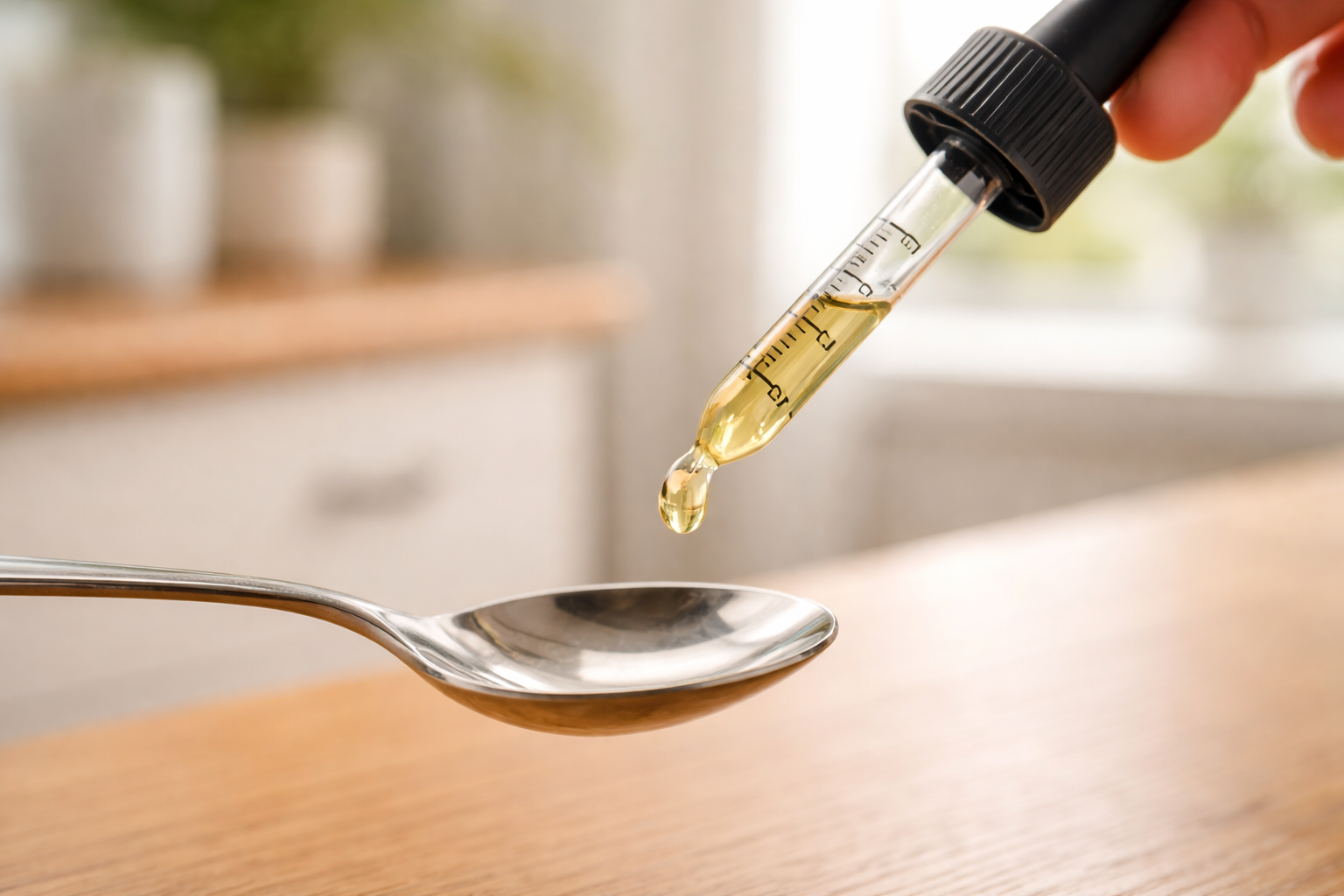
Microdosing Over 70: Not a Trend, a Control System
Microdosing is not about weak effects. It is about minimizing surprise while preserving the ability to adjust.
A practical microdosing approach over 70 often means sub-milligram THC increments when THC is used, stabilizing for 2 to 3 days before any change, and reducing dose if dizziness, sedation, or confusion appears.
Escalation without benefit is not progress. It is noise.
If It Feels Too Strong
When older adults say “too high,” they often mean unsteady, anxious, foggy, or unable to do normal tasks comfortably.
A course correction usually involves one or more of these:
- ⬇️Reduce dose: by at least 50 percent on the next trial
- 🕰️Change timing: trial earlier in the day, not right before bed
- 🧭Change route: shift toward smaller increments if stacking risk is present
- 🌿Consider CBD-forward recalibration: especially for high sensitivity
If symptoms are severe or there is a fall, seek medical care.
Internal Resources
These links are designed to keep the seniors ecosystem coherent and practical.
Want a structured start?
If you are new to cannabis or supporting a parent who is, a guided plan is usually calmer and safer than experimentation. If you would like clinician guidance, you can schedule here: https://cedclinic.com/schedule/
FAQ
What is a low dose of THC for someone over 70?
Many older adults begin in the sub-milligram to 1 mg THC range, then adjust slowly based on function and side effects. The safest starting point depends on fall history, frailty, medication layering, and sensitivity.
How fast can I increase the dose?
A cautious approach over 70 often means holding the dose steady for 48 to 72 hours before any change, and increasing only if there is measurable benefit without new dizziness, sedation, or confusion.
Should I start with CBD or THC?
If fall risk is high, sensitivity is unknown, or medications already cause sedation, a CBD-forward start can reduce surprise. THC can still be appropriate for some older adults, but it should be introduced in small, measurable steps with attention to timing and steadiness.
Are edibles safe for seniors?
They can be, but delayed onset and long duration increase the risk of dose stacking. If edibles are used, the most important rule is to wait long enough before considering any additional dose.
What is dose stacking, and why does it matter after 70?
Dose stacking happens when a person takes a second dose before the first dose has fully taken effect. In older adults, stacking can produce prolonged dizziness, confusion, or unsteadiness that increases fall risk.
When is the safest time of day to trial a first dose?
Many older adults do best trialing earlier in the day, when a caregiver is available and mobility demands are predictable. Trialing right before bed can increase nighttime fall risk if bathroom trips are common.
What should I track during the first week?
Track one primary symptom target, plus fall-relevant signals such as standing dizziness, nighttime steadiness, daytime sedation, near-falls, and any new confusion. Predictability matters more than intensity.
What medications are most important to mention to my clinician?
Sleep medications, benzodiazepines, opioids, gabapentinoids, antidepressants, and blood pressure medications are common categories that can interact through sedation or orthostatic effects. If you take warfarin, clinician coordination is especially important because case reports and a systematic review describe INR elevation after CBD or cannabis exposure.
Is there research specifically in older adults?
Yes, but it is still limited compared with many standard medications. Prospective observational cohorts in adults 65+ describe common adverse effects such as dizziness and sleepiness, and systematic reviews in older populations describe THC dose relationships with certain adverse events. Larger trials focused exclusively on adults over 70 remain a gap.
References
-
🔗
Whiting PF, et al. Cannabinoids for Medical Use: A Systematic Review and Meta-analysis.
JAMA. 2015;313(24):2456-2473. doi:10.1001/jama.2015.6358. PMID: 26103030.
https://pubmed.ncbi.nlm.nih.gov/26103030/ -
🔗
Velayudhan L, et al. Evaluation of THC-Related Neuropsychiatric Symptoms Among Adults Aged 50 Years and Older: A Systematic Review and Metaregression Analysis.
JAMA Network Open. 2021;4(2):e2035913. doi:10.1001/jamanetworkopen.2020.35913.
https://jamanetwork.com/journals/jamanetworkopen/fullarticle/2775736 -
🔗
Abuhasira R, et al. Medical Cannabis for Older Patients: Treatment Protocol and Initial Results.
J Clin Med. 2019;8(11):1819. doi:10.3390/jcm8111819. PMID: 31683817.
https://pubmed.ncbi.nlm.nih.gov/31683817/ -
🔗
Smythe MA, et al. Anticoagulant drug-drug interactions with cannabinoids: A systematic review.
Pharmacotherapy. 2023. doi:10.1002/phar.2881. PMID: 37740600.
https://pubmed.ncbi.nlm.nih.gov/37740600/ -
🔗
Grayson L, et al. An interaction between warfarin and cannabidiol, a case report.
Epilepsy Behav Case Rep. 2017;9:10-11. doi:10.1016/j.ebcr.2017.10.001. PMID: 29387536. PMCID: PMC5789126.
https://pubmed.ncbi.nlm.nih.gov/29387536/ -
🔗
Effects of cannabidiol and Δ9-tetrahydrocannabinol on cytochrome P450 enzymes: a systematic review.
Drug Metab Rev. 2024. doi:10.1080/03602532.2024.2346767. PMID: 38655747.
https://pubmed.ncbi.nlm.nih.gov/38655747/
Evidence quality and relevance varies by indication, product type, route, and patient vulnerability. Older adult trials remain limited compared with many standard therapies.