
CED Clinic Recipes
Table of Contents
- Homemade Medicated Coffee and Tea Warm, Familiar, Thoughtfully Infused
- Introduction
- TL;DR
- Why You’ll Love This Recipe
- Functional Perks of This Feel-Good Treat
- Health Benefits: Food That Talks To Your Body
- Ingredients & Equipment You’ll Need
- How To Make Homemade Medicated Coffee and Tea
- Dosing Guide: Potent, But Predictable
- How To Make This Non-Euphoric Or Gently Altering
- Flavor & Pairing Suggestions
- Creative Ways To Use This Recipe
- Serving Ideas & Mood Pairings
- Storage Tips & Shelf Life
- Troubleshooting Common Mistakes
- Cannabis & Culinary Culture
- FAQ: Homemade Medicated Coffee and Tea
Homemade Medicated Coffee and Tea
Warm, Familiar, Thoughtfully Infused
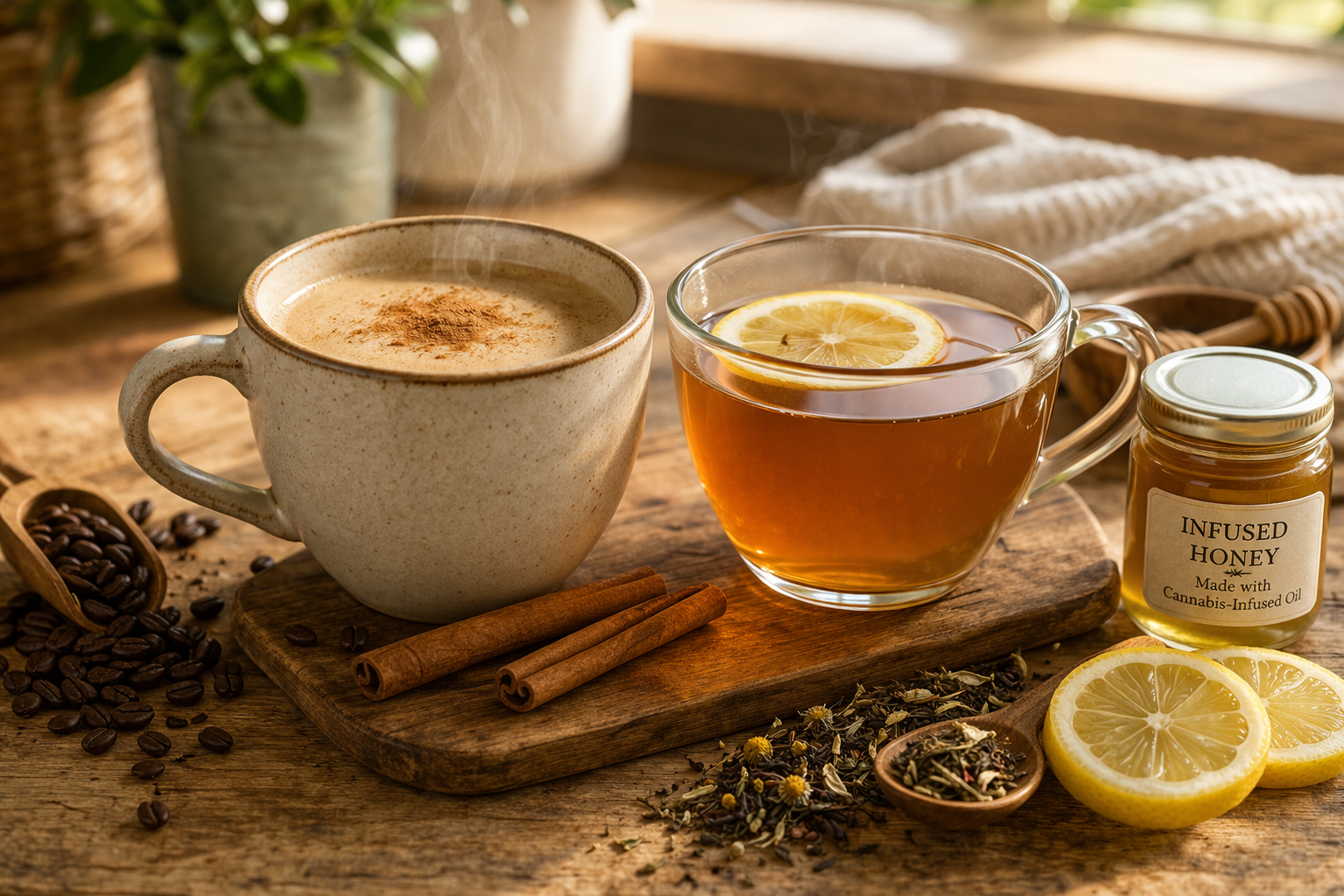
Homemade medicated coffee and tea offer a warm, practical way to enjoy infused beverages with more control, more consistency, and a little more pleasure in the process.
Quick Safety Reminders
Friendly reminders that prevent the most common edible mishaps.
✅ Portion first, then enjoy. The spoon is your measuring tool.
✅ Wait at least 90 minutes before reassessing effects.
✅ Label leftovers clearly if others share your kitchen.
Introduction
Homemade medicated coffee and tea can be one of the simplest ways to bring cannabis into a more food-forward routine. The format is familiar, the equipment is minimal, and the variations are easy to tailor for mornings, slower afternoons, or gentler evenings.
The practical key is this: cannabinoids dissolve into fat far better than water. That means these beverages work best when paired with infused oil, infused butter, infused honey, or a measured oral tincture meant for ingestion.
TL;DR
This is a practical guide to homemade medicated coffee and tea using infused oil, infused honey, or tincture. It works well for people who want warm infused beverages that feel more flexible and more portionable than many baked edibles.
✅ Ready in about 15 minutes
✅ Easy to scale from microdose to stronger portions
✅ Flexible for coffee, black tea, chai, or herbal tea
Why You’ll Love This Recipe
Most homemade edibles tilt sweet, dense, or unexpectedly strong. These drinks go in a different direction. They fit into real routines, real mugs, and real kitchens without asking much of the cook.
Because each drink can be measured by the spoonful, this format makes it easier to adjust dose with more care. That can be helpful for beginners, for experienced users aiming lower, and for anyone who prefers beverages over baked goods.
Functional Perks of This Feel-Good Treat
Small choices that add up to a smoother experience.
✨ Warm drinks can feel easier to portion than brownies, cookies, or candies.
✨ Fat-containing additions help infused cannabinoids distribute more naturally.
✨ Coffee and tea both carry familiar flavor cues that soften homemade infusion notes.
✨ These drinks are easy to personalize without rebuilding the base recipe each time.
Health Benefits: Food That Talks To Your Body
Coffee contains naturally occurring polyphenols and is often valued as much for ritual as for stimulation. Tea brings its own mix of aromatic compounds, flavonoids, and gentle variation depending on the style chosen.
Cannabinoids interact with the endocannabinoid system, a regulatory network involved in mood, appetite, inflammation, pain processing, and sleep. In a beverage format, they can feel more integrated into daily rhythm than a separate edible event.
As always, this is best framed as a supportive culinary approach rather than a cure-all. Effects depend on the infused ingredient, the meal context, individual sensitivity, and dose.
Ingredients & Equipment You’ll Need
☕ Ingredients
➕ 1 cup brewed coffee, espresso, black tea, chai, or herbal tea
➕ 1 teaspoon cannabis-infused coconut oil or infused butter
➕ 1 teaspoon infused honey, optional
➕ Measured oral tincture, optional alternative
➕ Milk or plant milk
➕ Sweetener, if desired
➕ Cinnamon
➕ Cocoa powder
➕ Ginger
➕ Lemon
🛠️ Equipment
➕ Mug or heat-safe glass
➕ Spoon or measuring spoon
➕ Milk frother or blender
➕ Kettle, coffee maker, or saucepan
How To Make Homemade Medicated Coffee and Tea
Step 1
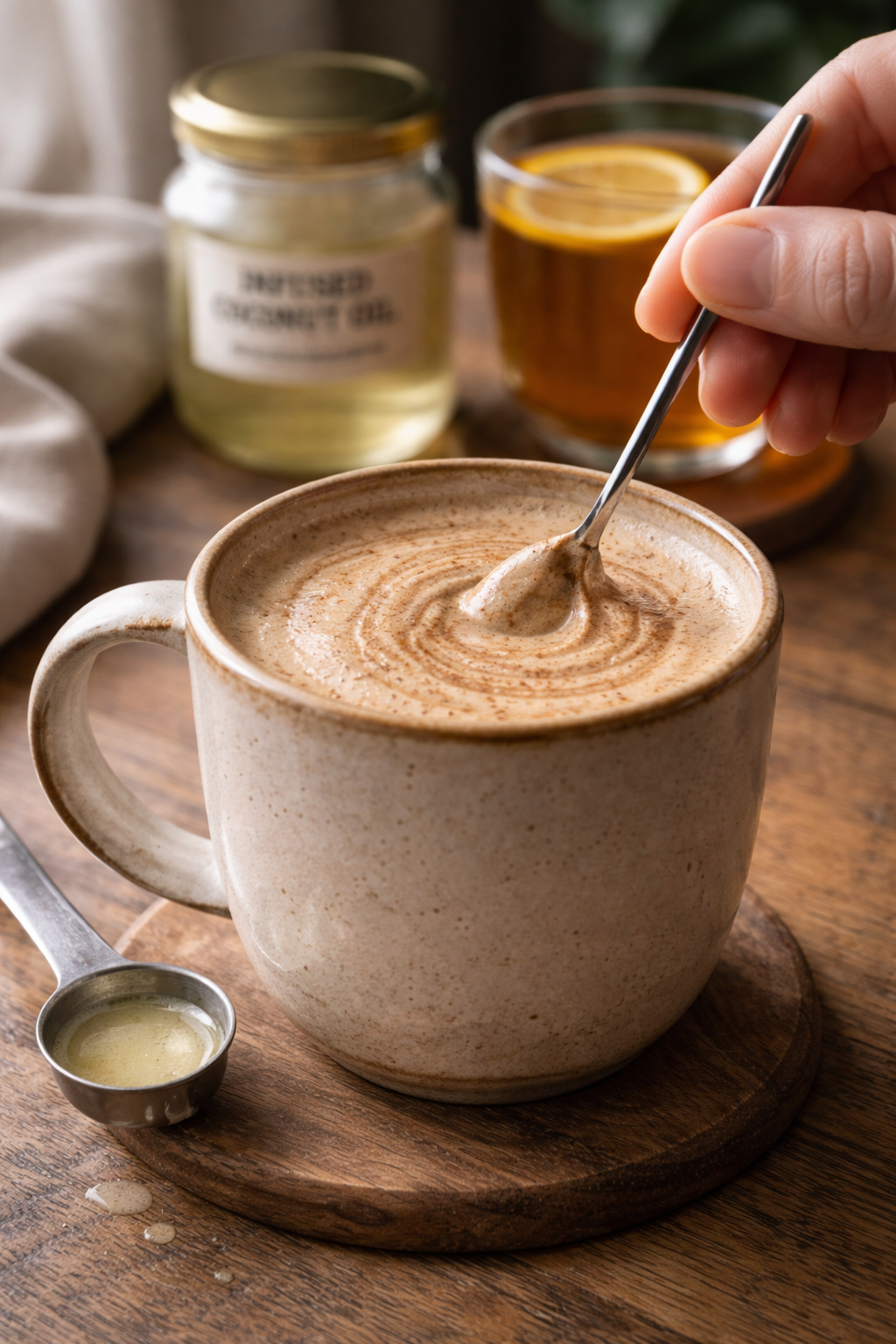
Brew your coffee or steep your tea as usual. Stronger bases often balance the flavor of infused ingredients a little better, especially when using infused oil or butter.
Step 2
Add a measured amount of infused coconut oil, infused butter, infused honey, or oral tincture. The spoon is doing important work here. Repeatable dosing starts with repeatable measuring.
Step 3
Stir well, froth, or blend briefly. This improves texture and helps distribute the infused ingredient more evenly. Add milk, sweetener, cinnamon, cocoa, ginger, or lemon if desired, then sip slowly.
Dosing Guide: Potent, But Predictable
Potency Calculation
Using a simple example, if your infused ingredient provides about 10 mg THC per teaspoon and you add 1 teaspoon to one mug, that drink contains roughly 10 mg THC total.
grams × THC% × 1,000 = estimated total mg THC in the starting material
10 mg per teaspoon × 1 teaspoon = 10 mg THC in the full mug
The real work is knowing the potency of the infused ingredient before it enters the cup.
Breakdown Per Serving
A single mug can still be split into smaller real-life portions.
| Portion | Estimated THC | How it looks in real life |
|---|---|---|
| Full mug | ≈ 10 mg THC | A full cup for a measured, moderate serving |
| Half mug | ≈ 5 mg THC | A beginner-friendly portion for many |
| Quarter mug | ≈ 2.5 mg THC | A practical microdose starting point |
Suggested Starting Doses
Beginner-friendly use often falls around 2.5 to 5 mg THC, which may be a quarter to a half mug depending on the recipe. Intermediate users may feel comfortable around 5 to 10 mg.
If you are newer to edibles, start with the smallest portion, wait at least 90 minutes, and only increase on another day once you understand how that amount feels.
Quick Math: DIY Dosing Calculator
THC percentage × grams of flower × 1,000 = estimated total mg THC.
Account for capture loss during decarboxylation and infusion.
Divide by the number of teaspoons, tablespoons, or servings you actually use.
Interactive Dose Calculator
Calculate your approximate dose per drink.
⚠️ Dosing Caveat:All dosing numbers are estimates. Actual potency can vary based on label accuracy, decarboxylation temperature and duration, infusion efficiency, storage conditions, mixing quality, metabolism, recent meals, tolerance, and gut motility.
Start low, wait at least 90 minutes before reassessing effects, and adjust slowly across different days rather than in a single session.
💡 Microdose Tip
Start with a few sips, not a full mug. Pair the drink with non-infused food so the ritual can stay cozy without the dose climbing too quickly.
How To Make This Non-Euphoric Or Gently Altering
For a lower-altering version, use a CBD-dominant infused ingredient or a high-CBD to low-THC ratio. You can also use plain coconut oil, plain butter, or plain honey and keep the ritual entirely non-infused.
True non-euphoric effects depend on personal physiology, dose, and timing, not just the label on the jar.
Flavor & Pairing Suggestions
Coffee often pairs naturally with cinnamon, vanilla, cardamom, cocoa, and maple.
Black tea and chai work well with milk, clove, orange peel, and ginger.
Herbal tea often feels more forgiving with lemon, chamomile, peppermint, or lavender-forward blends.
Strain names are less useful than your own repeated response to flavor, timing, and dose.
Creative Ways To Use This Recipe
➕ Make a small infused latte instead of a full coffee.
➕ Use black tea for a more classic café-style cup.
➕ Shift to herbal tea in the evening when caffeine is less welcome.
➕ Use infused honey in tea for smoother sweetness and easier measuring.
➕ Pair with oatmeal, toast, yogurt, or fruit instead of a sugary pastry.
➕ Keep a non-infused version nearby if you want the second cup to stay purely culinary.
Serving Ideas & Mood Pairings
These drinks fit best into moments that call for rhythm, warmth, and a little patience.
🌅 A slow morning coffee when the calendar is not rushing you.
📚 A lighter-dose tea during reading, writing, or quiet creative work.
🌙 A gentler herbal version when the day is winding down and the lights are getting softer.

Storage Tips & Shelf Life
Prepared coffee and tea are usually best fresh. What needs the most careful storage is the infused ingredient itself. Keep infused oil, honey, or butter in clearly labeled containers and store them according to the ingredient and preparation method.
If a pre-mixed beverage sits for any length of time, stir or froth again before drinking because infused fats may separate. Older infused ingredients may also feel milder over time.
Troubleshooting Common Mistakes
The drink looks oily on top. That is common with infused oils. Frothing or blending helps more than spoon-stirring alone.
The flavor is too herbal. Use stronger coffee, chai spices, cinnamon, cocoa, ginger, or vanilla.
The effects felt stronger than expected. Reduce the infused ingredient next time or split the mug into smaller portions before drinking.
Cannabis & Culinary Culture
Warm infused beverages sit at an interesting intersection of comfort and practicality. They are less like novelty edibles and more like a familiar kitchen habit, which may be part of why they appeal to so many people.
Coffee and tea already carry meaning for many households: pause, transition, focus, comfort, company. Bringing cannabis into that format can make dosing feel less theatrical and more integrated into ordinary life.
Final Thoughts
Homemade medicated coffee and tea are not complicated, but they do reward attention. The best version is rarely the strongest one. It is the one you can prepare consistently, enjoy comfortably, and dose thoughtfully.
A warm drink can be simple. A measured drink can also be smart. Ideally, this page helps make it both.
FAQ: Homemade Medicated Coffee and Tea
Can you put cannabis directly into coffee or tea?
Not very effectively on its own. Cannabinoids do not dissolve well in water, so most homemade medicated beverages work better with infused oil, butter, honey, or an oral tincture.
What is the best fat to use in medicated coffee?
Many people use infused coconut oil or butter because both blend reasonably well into hot coffee. Coconut oil tends to work especially well in blended or creamy drinks.
Is tea better than coffee for medicated drinks?
That depends on taste and purpose. Tea can be more forgiving in flavor and often works especially well with infused honey, while coffee can better mask stronger herbal notes with cream, cinnamon, or cocoa.
How long does a medicated drink take to kick in?
Onset varies. Because these are orally consumed preparations, effects may take time, especially when fat is involved and the drink is consumed alongside food.
Can I make these recipes with CBD instead of THC?
Yes. CBD-dominant infused ingredients can be used in the same formats for a less intoxicating version.
What is a good beginner dose for a medicated coffee or tea?
Many beginners start around 2.5 to 5 mg THC, which may be only part of a full mug depending on the recipe and infused ingredient.
Can I use tincture instead of infused butter or oil?
Yes, as long as it is an oral tincture intended for ingestion. Flavor and mixing behavior vary by product.
Why does the oil float on top?
Because oil and water naturally separate. Coffee and tea are mostly water, so stirring helps somewhat, but frothing or blending helps more.
Can I batch-prep medicated coffee or tea?
You can, but most are better fresh. The infused ingredient can separate during storage, and dose consistency may become less predictable unless remixed thoroughly.
Should I drink these on an empty stomach?
Many people prefer not to. Taking oral cannabis with some food may produce a steadier, more comfortable experience for some individuals.