
Table of Contents
- Endocannabinoid System in Older Adults: 7 Essential Insights
- Introduction: Why the endocannabinoid system in older adults matters
- What is the endocannabinoid system?
- How aging alters the endocannabinoid system in older adults
- Why the endocannabinoid system in older adults matters clinically
- The potential benefits of cannabinoids for seniors
- Safety considerations and risks for seniors
- Types of cannabis products and administration methods
- Patient variability and personalization
- Limitations of current research
- Talking to your healthcare team
- Frequently asked questions (FAQ)
- Conclusion
- Contact CED Clinic
Endocannabinoid System in Older Adults: 7 Essential Insights
How aging reshapes ECS signaling and what that means for cannabis safety, dosing, and clinical decision-making later in life.
Introduction: Why the endocannabinoid system in older adults matters
A growing number of older adults are curious about medical cannabis for relief from chronic pain, insomnia, anxiety, appetite loss and other age-related ailments. Data summarized by Stanford Medicine (drawing from national survey data) notes that 7% of adults over 65 reported recent cannabis use in 2023, up from less than 5% in 2021. See: Stanford Medicine: Cannabis and older adults.
Yet few people understand the endocannabinoid system in older adults, the network of receptors, enzymes and signaling molecules that cannabis interacts with, or how it changes as we age. This guide explains what the ECS is, why its function can decline over time and what that might mean for seniors exploring cannabinoid therapies. For a practical senior-centered overview, see Cannabis for Seniors.
What is the endocannabinoid system?
The endocannabinoid system is an evolutionarily conserved biological network found in all mammals. It includes:
- Endocannabinoids – lipid-based signaling molecules produced on demand by the body. The best-studied molecules are anandamide (AEA) and 2-arachidonoylglycerol (2-AG).
- Receptors – primarily CB1 receptors concentrated in the central nervous system and CB2 receptors found in immune cells, bone, gastrointestinal tissues and peripheral nerves. These receptors also appear in organs like the heart, liver and kidneys.
- Enzymes – proteins that synthesize and break down endocannabinoids, including FAAH and MAGL, as well as synthesis pathways described in the literature (including NAPE-PLD and related enzymes).
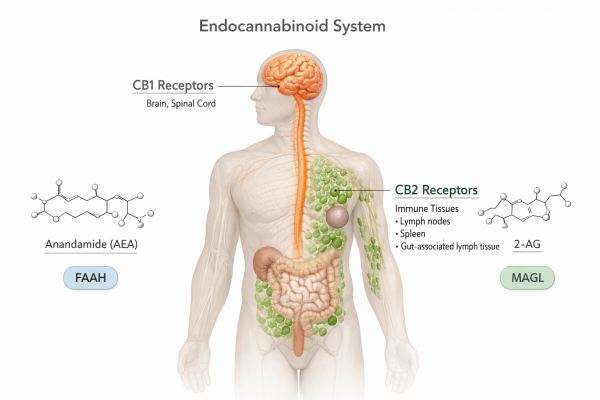
CB1 receptors concentrate in the brain and spinal cord. CB2 receptors are distributed across immune tissues. Anandamide and 2-AG are broken down by FAAH and MAGL.
The ECS plays a key role in maintaining homeostasis, the balance of biological processes. It modulates the release of neurotransmitters, regulates inflammatory responses, influences pain perception, and helps control functions such as appetite, sleep, mood, bone health and immune function. When a stressor pushes the body away from equilibrium, endocannabinoids are released to restore balance. This is one reason why cannabis compounds, which mimic endocannabinoid signaling, can have widespread effects on the body.
For clinician-facing mechanistic background that connects ECS biology to aging-related neurophysiology, see NIH-hosted reviews at PubMed Central and PubMed Central.
How aging alters the endocannabinoid system in older adults
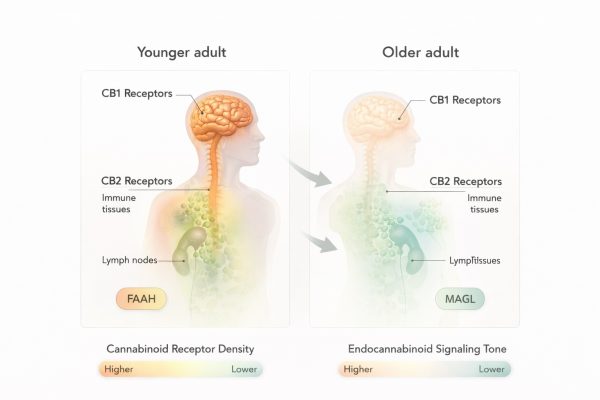
Receptor density and endocannabinoid signaling tone decline with age, with younger adults showing higher CB1 and CB2 activity compared to older adults.
As people age, several components of the endocannabinoid system change:
- Reduced endocannabinoid production – Research has described age-associated reductions in AEA and 2-AG in brain regions involved in memory and motor control. Lower endocannabinoid tone may contribute to chronic inflammation, cognitive vulnerability and reduced resilience to stress. For broader mechanistic context in aging and neurobiology, see: PubMed Central.
- Fewer cannabinoid receptors – CB1 and CB2 receptor density can diminish with age. This down-regulation may reduce the body’s responsiveness to endocannabinoids and phytocannabinoids alike, which is one reason the same labeled dose may feel different in the endocannabinoid system in older adults than in younger adults.
- Altered enzyme activity – Aging can affect the enzymes that regulate endocannabinoids. Some studies suggest increased FAAH activity and changes in synthesis pathways, leading to faster breakdown of signaling molecules and reduced ECS tone. For neuroinflammation and neuroprotection frameworks often discussed alongside ECS signaling, see: PubMed Central.
- Shifts in receptor expression – CB1 and CB2 expression patterns can shift across stages of aging. These shifts may influence inflammatory pathways, bone density and metabolic health.
These combined changes mean the ECS may become less efficient at maintaining balance in older adults. This decreased efficiency has been linked with conditions such as chronic pain, migraine, fibromyalgia and irritable bowel syndrome, as well as neurodegenerative disorders and metabolic diseases. This is a central reason discussions about cannabis in later life benefit from starting with physiology and not simply product potency.
Why the endocannabinoid system in older adults matters clinically
The decline of the ECS doesn’t guarantee illness, but it can increase vulnerability to disease. The ECS helps regulate:
- Neuroprotection and cognitive function – Endocannabinoids can protect neurons from excitotoxicity, oxidative stress and inflammation. Age-related reductions in ECS tone may contribute to memory changes, slower information processing and increased risk of neurodegenerative disease pathways.
- Inflammation and immune responses – CB2 receptors modulate immune cell activity and help keep inflammation in check. Declines in CB2 signaling can worsen chronic low-grade inflammation, a major driver of age-related disease.
- Pain and musculoskeletal health – CB1 and CB2 receptors in peripheral nerves and joints influence pain signaling and inflammatory responses. A weaker ECS may contribute to heightened sensitivity to pain and slower recovery from injuries. For practical clinical context, see Chronic Pain and Inflammation.
- Metabolic function and bone health – The ECS is involved in energy balance, fat metabolism and bone remodeling. Alterations may contribute to insulin resistance, weight shifts and osteoporosis risk.
- Sleep, mood and stress response – Endocannabinoids help regulate the sleep-wake cycle and mediate stress response. Lower ECS tone is associated with insomnia, mood disturbances and heightened stress. For sleep-focused guidance, see Cannabis for Sleep and Sleep Disorders and Circadian Rhythm Issues.
Understanding these roles helps explain why older adults explore cannabis. By supplementing the ECS with phytocannabinoids such as THC and CBD, some seniors hope to restore balance in systems affected by aging. However, evidence is limited, and cannabis use comes with distinct risks that warrant careful consideration, particularly within the endocannabinoid system in older adults.
The potential benefits of cannabinoids for seniors
Preliminary studies and patient reports suggest that cannabis-based therapies may offer symptom relief for certain conditions common in older adults. For example:
- Chronic pain and arthritis – Observational studies and patient-reported outcomes suggest some individuals report improvements in pain, stiffness and function. For practical context on pain and inflammation, see Chronic Pain and Inflammation. For an example of patient-reported outcomes literature in arthritis populations, see PubMed Central.
- Insomnia and sleep disorders – Observational studies report that medical cannabis use is associated with better sleep quality and decreased insomnia. Practical sleep guidance is here: Cannabis for Sleep, along with deeper circadian and sleep disorder context at Sleep Disorders and Circadian Rhythm Issues.
- Anxiety and mood disorders – Some seniors report reduced anxiety and improved mood with low doses of CBD or balanced THC:CBD products. However, higher THC exposure can worsen anxiety and paranoia for some individuals. See Cannabis for Anxiety and Anxiety and Stress.
- Appetite stimulation and nausea relief – Approved cannabinoid medications like dronabinol are used to combat nausea and appetite loss in certain conditions. Some older adults explore cannabis for appetite support when conventional approaches fall short.
- Spasticity and neuropathic pain – Cannabinoids have demonstrated some efficacy in managing spasticity from multiple sclerosis and some neuropathic pain syndromes. Results are mixed across studies, and benefits appear modest and dose-dependent.
It is important to note that high-quality human evidence remains scarce for many of these indications in older populations. Much of the available data comes from observational studies, surveys, and mechanistic research. When evidence is limited, clinicians must balance potential benefits against known and unknown risks and tailor recommendations to each patient’s goals and health status, especially given the variability of the endocannabinoid system in older adults.
Safety considerations and risks for seniors
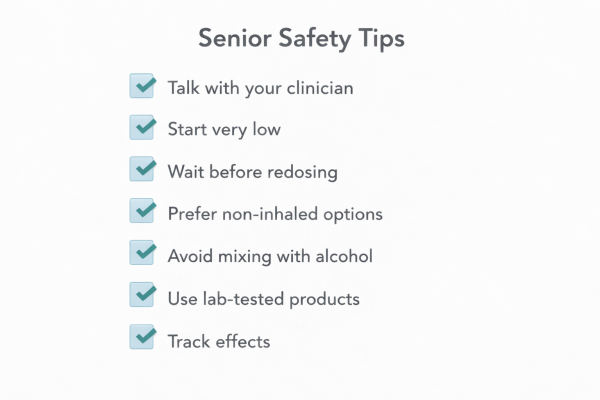
Simple safety checklist for older adults using cannabis, highlighting clinician involvement, cautious dosing, and product quality.
Stronger products and accidental over-consumption
Today’s cannabis products can be far more potent than those used decades ago. That potency gap increases the risk that older adults unintentionally consume more THC than intended, especially with concentrates and edibles. Stanford Medicine highlights this practical risk and the rise in accidental over-consumption concerns among older adults here: Stanford Medicine: Five things medical experts want you to know.
Cardiovascular risks
Cannabis can raise heart rate and blood pressure, which may stress the cardiovascular system. Older adults, especially those with heart disease or unstable blood pressure, may face increased risk of adverse cardiovascular symptoms. Public health cautions for adults over 55 are summarized in Health Canada guidance, and Ottawa Public Health specifically flags cardiovascular conditions as a reason older adults should consider avoiding cannabis: Ottawa Public Health: Cannabis information for older adults.
Cognitive effects and fall risk
THC is psychoactive and can impair memory, attention and coordination. In older adults, these effects may last many hours and can include anxiety, paranoia, confusion, and dizziness. These changes increase fall risk and injuries, particularly when cannabis is taken in the evening and combined with nighttime waking. Ottawa Public Health emphasizes cognitive and balance vulnerabilities in older adults here: Ottawa Public Health.
Slower metabolism and medication interactions
Aging slows metabolism and affects how drugs are processed. Seniors may clear cannabinoids more slowly, prolonging their effects and increasing the risk of drug interactions. CBD and THC can influence metabolic pathways involved in processing a range of medications. Because polypharmacy is common in older adults, it is crucial to discuss cannabis use with a healthcare provider to identify potential interactions and adjust monitoring when needed. Public health agencies emphasize this interaction risk for older adults: Ottawa Public Health guidance.
Organ health
Individuals with liver, kidney or cardiovascular disease are particularly susceptible to adverse effects. Cannabis may remain longer in the body when organ function is impaired, and the risk profile of cannabinoids can shift in ways that matter for safety. Health Canada explicitly notes that adults over 55 should avoid cannabis in the setting of serious liver, kidney, or heart or blood vessel disease: Health Canada: adults over 55. Ottawa Public Health similarly highlights liver disease, kidney disease, and cardiovascular disease as reasons older adults should consider not using cannabis: Ottawa Public Health.
Mental health and addiction
Regular use of high-THC cannabis can worsen certain symptoms for some individuals, including anxiety or mood instability. Long-term use can also lead to cannabis use disorder, characterized by cravings, tolerance, and withdrawal symptoms such as irritability, insomnia and appetite changes. Some older adults hesitate to disclose cannabis use to clinicians, delaying recognition and support when problematic patterns develop.
Practical safety tips
Public health agencies recommend the following for older adults considering cannabis:
- Consult your healthcare provider – Discuss goals, medical history and medications with a clinician who can help assess risks. For a senior-centered starting point, see Cannabis for Seniors.
- Start low and go slow – Begin with a very low THC dose and wait long enough to assess effects before considering more. This matters especially for edibles, where onset is delayed and the endocannabinoid system in older adults may clear cannabinoids more slowly.
- Choose balanced products – Products with equal or higher CBD relative to THC may reduce some THC-related adverse effects in some individuals.
- Avoid smoking and vaping – Smoking introduces combustion toxins and can increase cardiovascular and respiratory burden. Consider tinctures, capsules, edibles or topicals instead.
- Avoid mixing substances – Combining cannabis with alcohol or sedating medications can increase impairment and fall risk.
- Buy from regulated sources – Regulated products are tested for potency and contaminants and include labeling of THC and CBD amounts. COAs can help confirm what’s in a product. See How to Read a Cannabis COA.
- Use safety equipment – If balance is impaired, prioritize fall prevention strategies and avoid driving or operating machinery while under the influence.
- Monitor and adjust – Track dose, timing, formulation and effects. If side effects occur, reduce dose or discontinue and contact your clinician.
For a structured dosing framework aligned with safety and personalization, see Smart Cannabis Dosing.
Types of cannabis products and administration methods
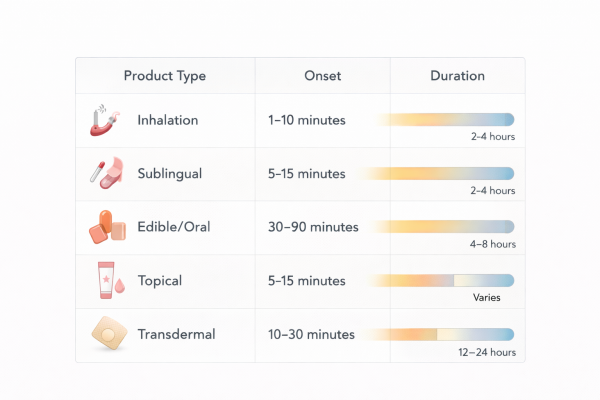
Different cannabis products vary in onset and duration. Inhaled and sublingual forms act faster, while oral and transdermal formats last longer.
Understanding how different products deliver cannabinoids can help seniors tailor their approach:
- Inhalation (smoking or vaping) provides rapid onset (minutes) and higher immediate bioavailability. However, smoking exposes the lungs to combustion products, and vaping can deliver very high THC concentrations. Many older adults choose non-inhaled formats to reduce respiratory burden.
- Sublingual tinctures and sprays are absorbed under the tongue, often providing effects within 15 to 60 minutes. They can allow more precise dosing and avoid lung exposure.
- Edibles, beverages and capsules pass through the digestive tract and liver. Effects are delayed (often 30 minutes to 4 hours), longer-lasting (often 6 to 12 hours) and more difficult to predict. Delayed onset is a common reason people redose too soon. This matters even more in the endocannabinoid system in older adults, where slower metabolism can extend impairment.
- Topical creams and balms may relieve localized pain or inflammation without meaningful systemic effects for many users, since many topical cannabinoids do not reach substantial bloodstream concentrations.
- Transdermal patches deliver cannabinoids slowly through the skin into the bloodstream, providing steadier dosing. Data on use in seniors remains limited.
When selecting a product, prioritize lab-tested formulations, avoid homemade products when dosing precision matters, and consider products with clear cannabinoid ratios. Look for Certificates of Analysis (COAs) from reputable laboratories. See How to Read a Cannabis COA.
Patient variability and personalization
Every individual’s ECS is unique. Genetic factors, lifestyle, diet, microbiome composition and other medications influence how cannabis affects someone. Older adults metabolize drugs more slowly and may be more sensitive to cannabinoids. Starting low, monitoring effects and adjusting dosage gradually is key. Some seniors may find relief with very small amounts of THC or primarily CBD-dominant products, while others may not tolerate cannabis at all.
Personalization also involves timing. For example, using a small dose of a balanced THC:CBD tincture 1 to 2 hours before bedtime may help with insomnia without causing morning grogginess. Conversely, daytime use of high-THC products can impair cognition and mobility and should generally be avoided in those at fall risk. If sleep is the priority, see Cannabis for Sleep and Sleep Disorders and Circadian Rhythm Issues.
For anxiety-related personalization and dosing considerations, see Cannabis for Anxiety and Anxiety and Stress.
This is the heart of working with the endocannabinoid system in older adults: the goal is not maximal effect, it is the smallest effective change that supports function, sleep, comfort, and safety.
Limitations of current research
Although preclinical studies and surveys are promising, clinical trials involving older adults remain limited. Many studies exclude participants over 65, making it difficult to extrapolate results to seniors. Moreover, cannabis products are diverse; different strains, ratios and formulations have varying effects. Regulatory barriers also hinder large-scale research. As a result, there is no universal dosing guideline for seniors, and clinicians must rely on observational data, mechanistic studies and individualized assessment.
This limitation is also why education about the endocannabinoid system in older adults matters. Understanding physiology helps patients and clinicians interpret why responses are variable and why cautious dosing and monitoring are not simply a slogan, but a practical safety requirement.
Talking to your healthcare team

Many older adults discuss cannabis use, medications, and safety considerations with their clinicians.
Open communication with healthcare providers is essential. Many physicians are still unfamiliar with cannabis, but there is growing interest in cannabinoid medicine. When discussing cannabis:
- Be honest about current use or interest. Let providers know what symptoms you hope to address.
- Share a full list of medications, including over-the-counter drugs and supplements, so clinicians can check for interactions.
- Ask about alternative therapies that may provide relief with fewer risks.
- Request referrals to specialists knowledgeable in geriatric pharmacology or cannabinoid medicine if your provider is unsure.
Providers can help monitor for side effects, adjust dosages or suggest alternative approaches. They may also coordinate with pharmacists and specialists for safe medication management. If caregiving is part of the decision-making environment, see Caregiver Support for Seniors.
Frequently asked questions (FAQ)
What is the endocannabinoid system?
The ECS is a network of receptors, signaling molecules (endocannabinoids) and enzymes that helps maintain balance in the body. It regulates processes like pain, inflammation, mood, appetite and sleep.
Does the endocannabinoid system in older adults decline with age?
Many studies suggest that endocannabinoid levels and cannabinoid receptor density can decrease with age, while enzyme activity that breaks down endocannabinoids can shift in ways that reduce ECS tone. These changes may contribute to inflammation, pain sensitivity and cognitive vulnerability. For clinician-facing mechanistic context, see NIH-hosted reviews at PubMed Central and PubMed Central.
Can cannabis restore ECS function in seniors?
Cannabis compounds mimic endocannabinoids and can activate cannabinoid receptors, potentially compensating for decreased endocannabinoid tone. Some seniors report relief of pain, insomnia and anxiety with low doses of cannabis. However, evidence is limited, and cannabis carries significant risks for older adults. Public health guidance for adults over 55 is summarized by Health Canada, and risk cautions are discussed by Stanford Medicine.
Is cannabis safe for seniors with heart or liver disease?
Cannabis can raise heart rate and blood pressure and may strain the cardiovascular system. It may also remain longer in the body when liver or kidney function is impaired. Adults with heart disease, liver disease or kidney disease should avoid cannabis or use it only under close medical supervision. See Health Canada: adults over 55 and Ottawa Public Health.
What are the safest forms of cannabis for seniors?
Non-inhaled products like low-dose sublingual tinctures, capsules or carefully dosed edibles with equal or higher CBD than THC are often considered lower respiratory risk options. Avoid smoking and vaping, choose lab-tested products, start with the lowest possible dose and wait long enough before taking more. For structured dosing guidance, see Smart Cannabis Dosing and for product verification, see How to Read a Cannabis COA.
Can cannabis interact with my medications?
Yes. CBD and THC can influence medication metabolism pathways. This can raise levels of drugs like blood thinners, seizure medications and antidepressants or reduce their effectiveness. Because polypharmacy is common in older adults, medication review with a clinician is important before using cannabis. Public health interaction cautions are summarized at Ottawa Public Health.
Conclusion
The endocannabinoid system in older adults plays a central role in maintaining balance across numerous physiological processes, and its decline with age may contribute to pain, inflammation, sleep problems and mood disorders. While many seniors report symptomatic relief from cannabis, the evidence base remains limited, and the risks, especially related to cardiovascular strain, cognition, falls and drug interactions, are substantial.
Before using cannabis, older adults should consult healthcare providers, start with very low doses and choose lab-tested products with balanced cannabinoid profiles. A thoughtful, individualized approach can help seniors explore cannabinoid therapies while minimizing harm.
Contact CED Clinic
If you’d like individualized guidance on cannabis use, dosing, product selection, or medication interaction risk, CED Clinic can help.
- Visit CEDclinic.com
- Contact Us
- Cannabis for Seniors
- Smart Cannabis Dosing
- How to Read a Cannabis COA
For urgent symptoms, chest pain, severe confusion, or falls, seek emergency care.