






























| Audience | Patients, caregivers, clinicians, and cannabis-science readers interested in posttraumatic stress disorder and emotion regulation |
| Primary Topic | acute oral THC, cognitive reappraisal, and brain activation in adults with PTSD |
| Source | Read the full source |
Table of Contents
- THC and PTSD Emotion Regulation: What a New Brain-Imaging Study Actually Found
- How to Interpret This Acute Oral Thc, Cognitive Reappraisal, And Brain Activation In Adults With Ptsd Evidence Without Overstating It
- The Same Study Can Mean Different Things Depending on the Question Being Asked
- A Signal Worth Discussing, Not Self-Prescribing
- Useful Evidence With Practical Gaps
- Small Evidence Bases Can Look Larger in Review Form
- Outcome Measures Do Not Answer Every Bedside Question
- A Step Forward, Not the Final Word
- Monitoring Matters
- What Better Evidence Would Need
- Access Should Not Outrun Evidence Quality
- Frequently Asked Questions
THC and PTSD Emotion Regulation: What a New Brain-Imaging Study Actually Found
A July 16, 2026 randomized brain-imaging study found that 5 mg and 10 mg oral THC reduced recruitment of prefrontal control circuitry during cognitive reappraisal in 37 adults with PTSD, without a detectable improvement in self-reported negative affect.
| Study Type | Randomized, double-blind, placebo-controlled experimental study |
| Participants | 37 adults with PTSD |
| Groups | Placebo, 5 mg dronabinol, or 10 mg dronabinol |
| Procedure | Single oral dose before fMRI during a validated cognitive reappraisal task |
| Primary Neural Finding | Both THC doses reduced prefrontal and parietal activation during reappraisal of negative images |
| Dose Pattern | Attenuation was broader and stronger at 10 mg |
| Subjective Finding | Negative affect ratings changed with task condition but did not differ reliably by dose |
| Interpretation | Possible neural-subjective dissociation after acute THC |
| Major Limitation | Small, single-dose study with neural and task outcomes rather than clinical PTSD treatment outcomes |
| Journal | Neuropsychopharmacology |
| Published | July 16, 2026 |
| PMID | 42463794 |
| DOI | 10.1038/s41386-026-02502-2 |
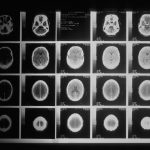
Adults with PTSD received placebo, 5 mg dronabinol, or 10 mg dronabinol before completing a cognitive reappraisal task during fMRI. Cognitive reappraisal asks participants to reinterpret negative material in a way intended to change its emotional impact.
The study was designed to test acute dose-related effects on neural recruitment and subjective affect. It was not a longitudinal PTSD treatment trial.
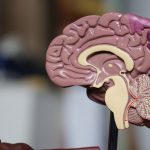
Relative to placebo, both THC doses were associated with reduced activation across prefrontal and parietal regions involved in top-down control during reappraisal of negative images.
The 10 mg condition showed broader and stronger attenuation than the 5 mg condition, supporting a dose-related neural effect.
Participants’ in-scanner negative affect ratings responded to the task conditions, but the ratings did not differ reliably by THC dose. Post-scan valence and arousal ratings also showed expected stimulus effects without reliable dose effects.
That null subjective result is central. Less recruitment of control circuitry cannot automatically be labeled more efficient regulation, emotional relief, or clinical benefit.
Brain-imaging differences can reveal pharmacologic effects, but they do not by themselves establish whether a person feels better or functions better. Here, the neural signal and the reported emotional experience did not move together.
The authors describe this as a possible neural-subjective dissociation. The current sample may also have been too small to detect modest behavioral effects.
The study supports careful counseling that acute THC can change emotion-regulation circuitry in PTSD, with stronger neural attenuation at the higher tested dose.
It does not justify substituting THC for trauma-focused psychotherapy or established PTSD care. Product, dose, route, timing, impairment risk, comorbidity, and treatment goals still require individualized review.
The result fits a broader pattern in cannabis research: a measurable biological effect may be real while its clinical meaning remains uncertain. This distinction is especially important in brain-imaging studies, where direction of activation is not a simple benefit scale.
Existing reviews of cannabis for PTSD include observational reports and small clinical studies with substantial heterogeneity. This new experiment adds a controlled mechanistic result, but it does not resolve whether cannabinoid treatment improves core PTSD outcomes over time.
The most important feature of this paper is the mismatch between what changed on the scan and what participants reported feeling. That is exactly where clinical restraint belongs.
For a patient with PTSD, the practical question is not whether THC changes the brain. It clearly can. The question is whether a specific formulation, dose, and plan produces meaningful benefit with acceptable risk. This study does not answer that treatment question.
How to Interpret This Acute Oral Thc, Cognitive Reappraisal, And Brain Activation In Adults With Ptsd Evidence Without Overstating It
A useful evidence report should let the signal breathe without inflating it.
The right question is not whether the paper is positive or negative, but what kind of decision it can responsibly support.
A Four-Step Reading Frame
Evidence type
Start by identifying whether the paper is a randomized trial, review, meta-analysis, observational study, or protocol.
Population
Ask whether the studied population matches the patient or clinical scenario involving posttraumatic stress disorder and emotion regulation.
Outcome meaning
Look at what actually changed, how it was measured, and whether the change would matter in daily life.
Safety and uncertainty
Read limitations and adverse effects as part of the result, not as a footnote.
The Same Study Can Mean Different Things Depending on the Question Being Asked
Scientific papers rarely answer a single question. Patients, clinicians, researchers, policymakers, and critics often read the same data differently. The perspectives below explore how this study looks through several evidence-based lenses.
A Signal Worth Discussing, Not Self-Prescribing
For patients interested in acute oral THC, cognitive reappraisal, and brain activation in adults with PTSD, the paper creates a reasonable conversation starter but not a do-it-yourself treatment plan.
In this case, the key is to keep posttraumatic stress disorder and emotion regulation in view while avoiding claims the study did not test.
Useful Evidence With Practical Gaps
Clinicians can use the paper to discuss posttraumatic stress disorder and emotion regulation, but the evidence still leaves product, dose, monitoring, and patient-selection questions open.
In this case, the key is to keep posttraumatic stress disorder and emotion regulation in view while avoiding claims the study did not test.
Small Evidence Bases Can Look Larger in Review Form
Systematic reviews can make a field feel mature even when the underlying trials remain few, short, or heterogeneous.
In this case, the key is to keep posttraumatic stress disorder and emotion regulation in view while avoiding claims the study did not test.
Outcome Measures Do Not Answer Every Bedside Question
The paper reports measurable outcomes, but patients also need information about durability, adverse effects, interactions, and real-world use.
In this case, the key is to keep posttraumatic stress disorder and emotion regulation in view while avoiding claims the study did not test.
A Step Forward, Not the Final Word
This paper advances the conversation by gathering available evidence, but it also highlights how much cannabinoid research still depends on small or uneven studies.
In this case, the key is to keep posttraumatic stress disorder and emotion regulation in view while avoiding claims the study did not test.
Monitoring Matters
If cannabinoids are considered clinically, monitoring should include symptom response, side effects, sedation or impairment, medication interactions, and patient goals.
In this case, the key is to keep posttraumatic stress disorder and emotion regulation in view while avoiding claims the study did not test.
What Better Evidence Would Need
Stronger trials should define formulation, dose, comparator, duration, responder profiles, and safety monitoring before broad claims are made.
In this case, the key is to keep posttraumatic stress disorder and emotion regulation in view while avoiding claims the study did not test.
Access Should Not Outrun Evidence Quality
Patients deserve access to careful information, but public messaging should not make early evidence sound settled.
In this case, the key is to keep posttraumatic stress disorder and emotion regulation in view while avoiding claims the study did not test.
Join the Conversation
Have a question about how this applies to your situation? Ask Dr. Caplan
Want to discuss this topic with other patients and caregivers? Join the forum discussion


Frequently Asked Questions
Does this study prove that acute oral THC, cognitive reappraisal, and brain activation in adults with PTSD works?
No. It supports a clinically interesting signal, but proof requires larger, better-controlled, and more specific trials.
Is this enough evidence to change treatment on its own?
No. It can inform a clinical conversation, but it should not replace individualized medical judgment or established care.
Why does study design matter here?
Design affects how confidently readers can separate a true treatment effect from bias, placebo response, measurement choices, and patient selection.
What is the biggest limitation?
The biggest limitation is that the available studies are relatively small, heterogeneous, and not long enough to answer every practical safety question.
Does this apply to every cannabis or CBD product?
No. Products differ by cannabinoid content, dose, route, purity, and testing standards, so one paper cannot validate every product.
What should patients ask their clinician?
Patients should ask how the evidence relates to their own posttraumatic stress disorder and emotion regulation, medication list, risks, goals, and monitoring plan.
Are side effects still important if the findings are positive?
Yes. Benefit and risk have to be interpreted together, especially for sedation, impairment, interactions, and vulnerable populations.
Why include this as a full CED report?
The paper is recent, clinically relevant, and evidence-based enough to deserve careful standalone interpretation rather than a short mention.
What would stronger research add?
Stronger research would clarify formulation, dose, duration, responder profiles, active comparators, long-term outcomes, and safety monitoring.
What is the practical takeaway?
The practical takeaway is cautious interest: the signal is worth knowing, but the clinical decision still has to be individualized.
