





























| Audience | Patients using or considering CBD for stress and anxiety, caregivers, and clinicians evaluating cannabinoid evidence quality |
| Primary Topic | functional neuroimaging evidence for CBD’s effects on stress and anxiety circuitry |
| Source | Read the full source |
CBD and Anxiety: What a New Brain-Imaging Review Actually Shows
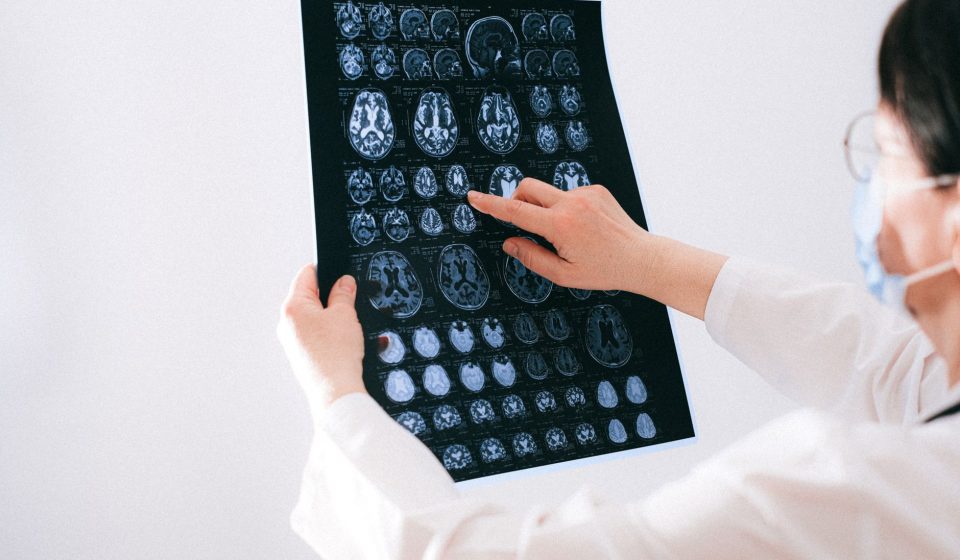
A 2026 systematic review pooled twelve human neuroimaging studies comparing CBD with placebo under stress or anxiety conditions. It found a wide, inconsistent scatter of brain effects across studies, low to very low certainty evidence, and no reproducible neural signature for CBD’s reported anxiolytic effects.
| Study Type | Systematic review (PRISMA 2020, PROSPERO-registered) |
| Population | Adults over 18, healthy volunteers and people with stress or anxiety symptoms such as social anxiety disorder |
| Studies Included | 12 studies across 7 participant cohorts |
| Participants | 146 total participants |
| Intervention | Oral or inhaled CBD, 100 mg to 1,000 mg, compared with placebo |
| Imaging Methods | Functional MRI, PET, and SPECT under stress- or anxiety-related tasks |
| Quality Tools | Cochrane Risk of Bias 2 (RoB 2) and GRADE certainty rating |
| Main Finding | Wide, inconsistent scatter of brain activation and perfusion changes across studies, with no reproducible regional pattern |
| Risk of Bias | Most included studies rated some concerns or high risk of bias |
| Certainty of Evidence | Low to very low across outcomes (GRADE) |
| Registration | PROSPERO CRD420251063369 |
| Journal | Frontiers in Neuroimaging (Clinical Neuroimaging section) |
| Published | July 9, 2026 |
| PMID | 42494831 |
| DOI | 10.3389/fnimg.2026.1860919 |
Across twelve eligible studies and 146 participants, CBD doses of 100 mg to 1,000 mg were compared with placebo using fMRI, PET, or SPECT during stress- or anxiety-related tasks.
Reported activation and perfusion peaks were scattered across many cortical and subcortical regions, including the amygdala, anterior cingulate cortex, insula, and prefrontal cortex, with mixed directions of change between studies rather than one consistent pattern.
Many patients already use CBD for stress or anxiety symptoms, and product marketing often implies a settled brain mechanism behind that use.
This review shows the neuroscience is less settled than the marketing, which matters for how patients should weigh confidence versus curiosity when choosing CBD as part of their care.
The authors rated most included studies as having some concerns or high risk of bias under the Cochrane RoB 2 tool, and GRADE certainty was low to very low across outcomes.
Small samples, varied doses, varied routes of administration, and varied imaging tasks make it hard to know whether differences between studies reflect real biology or methodological noise.
The review does not identify a validated brain biomarker for CBD response, does not establish which dose or route best engages stress circuitry, and does not resolve whether sex differences shape the neural response.
It also does not address whether a clear neural signal would even be necessary for CBD to provide meaningful symptom relief, since subjective benefit and measurable brain change are not the same question.
CBD sits at an unusual point in cannabis medicine: patient interest and product availability have outpaced the neuroscience explaining how it works, even as behavioral and self-report evidence for anxiety benefit continues to accumulate elsewhere in the literature.
A null or inconsistent neuroimaging result does not cancel out that behavioral evidence. It simply means the field cannot yet point to a specific, reproducible brain circuit as proof of mechanism, and should stop implying otherwise in patient-facing materials.
I read this review as a useful correction to overconfident mechanism talk, not as a reason to dismiss CBD for anxiety. Patients report benefit, and that self-report evidence deserves to be taken seriously on its own terms.
What this paper tells me is that when I discuss CBD with an anxious patient, I should describe it as a compound with promising but still-unproven neural mechanisms, not as a substance with a demonstrated brain-based anxiolytic pathway. That distinction protects patient trust.
How to Interpret This CBD Neuroimaging Evidence Without Overstating It
A useful evidence report should let the signal breathe without inflating it.
The right question here is not whether CBD helps anxiety, but what kind of mechanistic claim this specific review can responsibly support.
A Four-Step Reading Frame
Evidence type
Start by identifying that this is a systematic review of neuroimaging studies, not a clinical trial measuring symptom relief.
Population
Ask whether the studied cohorts, mostly small groups of healthy or mildly anxious adults, match the patient population in question.
Outcome meaning
Look at what was actually measured, brain activation and perfusion patterns, and recognize that this is a different outcome than reported symptom change.
Safety and uncertainty
Read the risk-of-bias and GRADE certainty ratings as part of the result itself, not as a footnote to skip.
The Same Study Can Mean Different Things Depending on the Question Being Asked
Scientific papers rarely answer a single question. Patients, clinicians, researchers, policymakers, and critics often read the same data differently. The perspectives below explore how this study looks through several evidence-based lenses.
Your Experience Is Still Valid Evidence
If CBD has helped your anxiety, this review does not overturn that experience. It simply means researchers have not yet pinned down a reproducible brain mechanism to explain it.
The key is to keep the neuroimaging evidence for CBD and anxiety in view while avoiding claims the study did not test.
Useful Caution for Patient Conversations
Clinicians can use this review to avoid overstating CBD’s mechanism of action when counseling anxious patients, while still acknowledging behavioral and self-report evidence elsewhere.
The key is to keep the neuroimaging evidence for CBD and anxiety in view while avoiding claims the study did not test.
Inconsistency Is the Finding, Not a Flaw in the Review
It would be easy to dismiss this as a disappointing null result, but the scattered findings across studies are themselves informative about how immature this specific evidence base is.
The key is to keep the neuroimaging evidence for CBD and anxiety in view while avoiding claims the study did not test.
Brain Scans Are Not the Whole Story
Neuroimaging outcomes answer a mechanistic question, not a clinical one. A patient can improve on validated anxiety scales without researchers ever finding a single reproducible brain signature.
The key is to keep the neuroimaging evidence for CBD and anxiety in view while avoiding claims the study did not test.
Earlier Reviews Skimmed Past the Imaging Data
Prior systematic, narrative, and scoping reviews of CBD and anxiety mostly summarized behavioral or preclinical findings and treated neuroimaging results narratively rather than as a formally synthesized outcome.
The key is to keep the neuroimaging evidence for CBD and anxiety in view while avoiding claims the study did not test.
What This Changes in the Exam Room
In practice, this means describing CBD to patients honestly: promising self-report and behavioral signals, but no settled brain-based explanation yet.
The key is to keep the neuroimaging evidence for CBD and anxiety in view while avoiding claims the study did not test.
What Better Neuroimaging Studies Would Need
The authors call for standardized imaging paradigms, improved reporting, and larger, more diverse, adequately powered samples to clarify CBD’s neural correlates.
The key is to keep the neuroimaging evidence for CBD and anxiety in view while avoiding claims the study did not test.
Marketing Claims Should Not Outrun the Neuroscience
Consumer CBD marketing frequently implies a proven brain mechanism for anxiety relief. This review is a reminder that regulators, retailers, and clinicians should not let that framing get ahead of the evidence.
The key is to keep the neuroimaging evidence for CBD and anxiety in view while avoiding claims the study did not test.
Join the Conversation
Have a question about how this applies to your situation? Ask Dr. Caplan
Want to discuss this topic with other patients and caregivers? Join the forum discussion


Frequently Asked Questions
Does this review prove that CBD does not help anxiety?
No. It reviews brain-imaging evidence for a neural mechanism, not symptom outcomes, so it cannot confirm or rule out clinical benefit.
What exactly did the researchers study?
They systematically reviewed 12 human neuroimaging studies that compared CBD with placebo using fMRI, PET, or SPECT under stress or anxiety conditions.
What was the main finding?
Reported brain activation and perfusion changes were scattered across many regions with mixed directions of effect, showing no consistent, reproducible pattern across studies.
How strong is this evidence?
The review itself is methodologically rigorous and PROSPERO-registered, but the underlying studies were rated as having some concerns or high risk of bias, with low to very low GRADE certainty.
Why does risk of bias matter here?
Risk of bias affects how confidently a reader can attribute a reported brain change to CBD itself rather than to small samples, design choices, or chance.
Does this apply to every CBD product?
No. Studied doses ranged from 100 mg to 1,000 mg across oral and inhaled routes, which does not represent every commercial CBD product or dosing strategy.
What should patients ask their clinician?
Patients can ask how this uncertainty about brain mechanism should or should not change their own CBD use, dosing, or monitoring plan.
Why does a null neuroimaging finding still matter if patients feel better?
Self-reported benefit and a proven brain mechanism are different kinds of evidence. Both matter, but neither can substitute for the other in clinical decision-making.
What would stronger neuroimaging research look like?
The authors call for standardized imaging paradigms, improved reporting practices, and larger, more diverse, adequately powered samples.
What is the practical takeaway?
The practical takeaway is honest uncertainty: CBD's brain mechanism for anxiety is not yet established, which should temper how confidently it is marketed or discussed.
